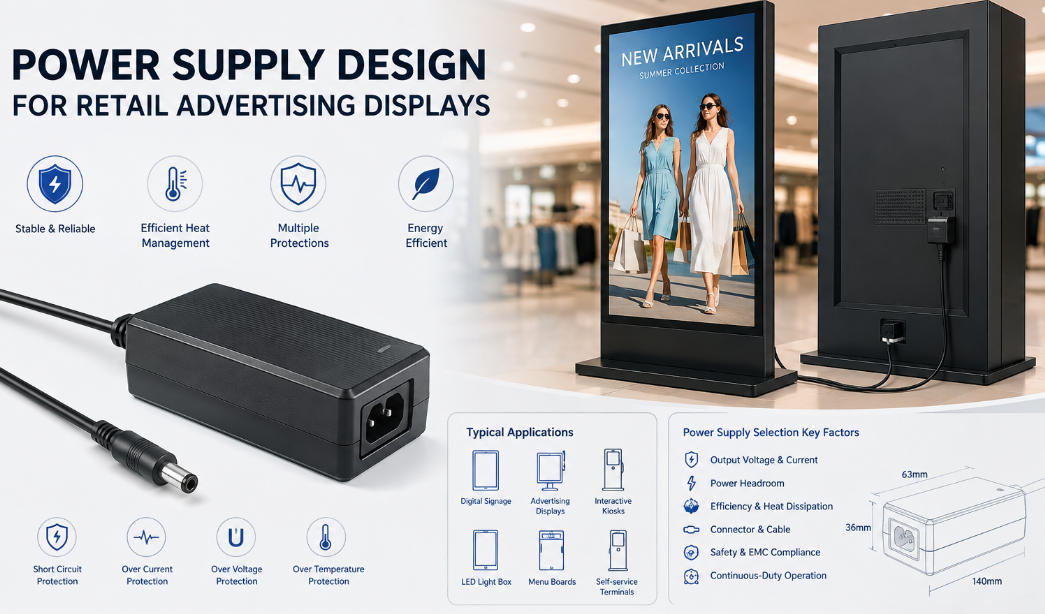
If you’ve noticed that modern chargers are getting smaller, faster, and cooler, you’re not imagining things. The shift is largely driven by GaN (Gallium Nitride) technology—a breakthrough in power electronics that’s redefining how charging works.
But what’s actually happening inside a GaN charger? And why is it so much more efficient than traditional silicon-based chargers?
Let’s break it down in a clear, practical way.
How GaN Charger Works: Step-by-Step
To understand how GaN charger works, let’s walk through the internal process.
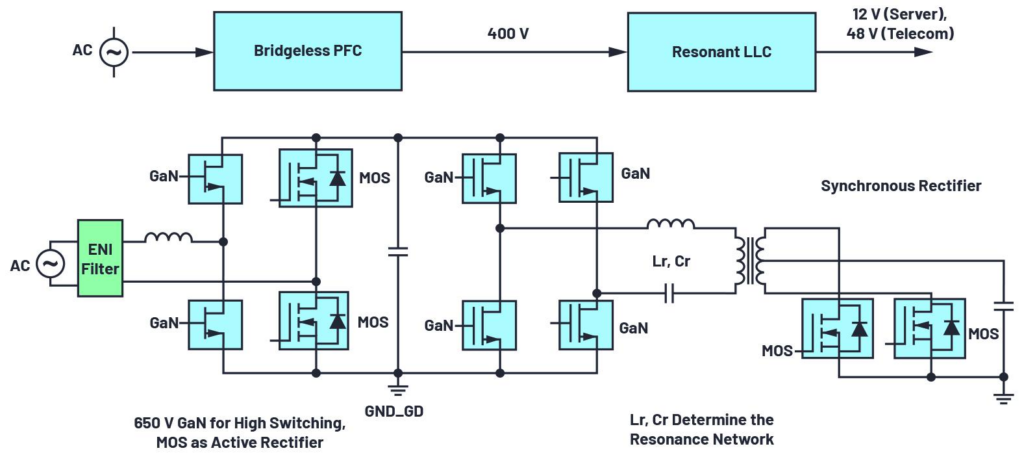
1. AC to DC Conversion
When you plug in your charger, it receives AC power from the wall outlet. Inside the charger:
- A rectifier converts AC into DC
- This is the first stage of power conversion
This step exists in both silicon and GaN chargers.
2. High-Frequency Switching (Where GaN Changes Everything)
Here’s the core innovation.
GaN transistors switch electricity much faster than silicon ones.
- Silicon switching frequency: typically ~100 kHz
- GaN switching frequency: can exceed 1 MHz
This is what people mean when they search for “GaN switching frequency explained.”
Why does higher frequency matter?
- Faster switching = less energy loss
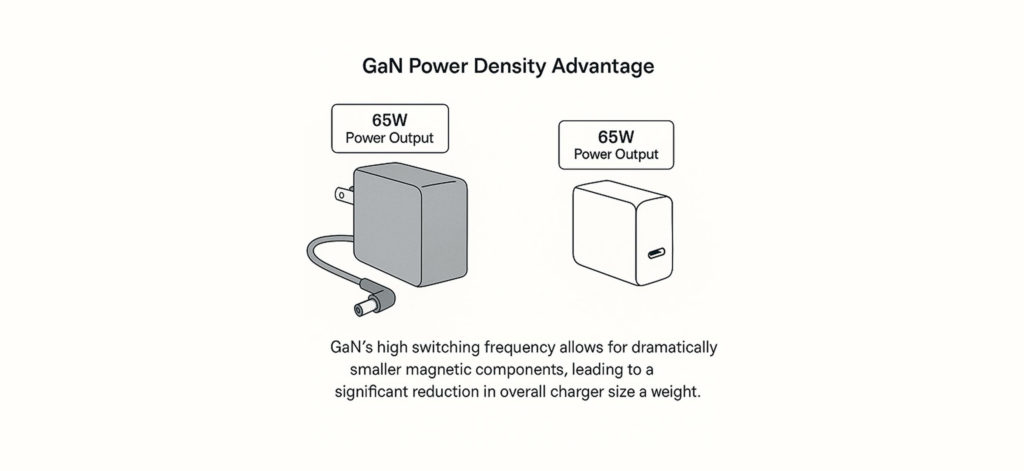
- Smaller transformers and capacitors
- More compact charger design
In simple terms:
GaN allows electricity to be controlled more precisely and more quickly.
3. Efficient Power Conversion
This is the heart of GaN power conversion.
Because GaN components:
- Have lower resistance
- Generate less heat
- Switch faster
They reduce energy loss during conversion.
Result:
- Higher efficiency (often 90%+)
- Less wasted energy as heat
- More power delivered to your device
4. Voltage Regulation & Smart Output
Modern GaN chargers also integrate:
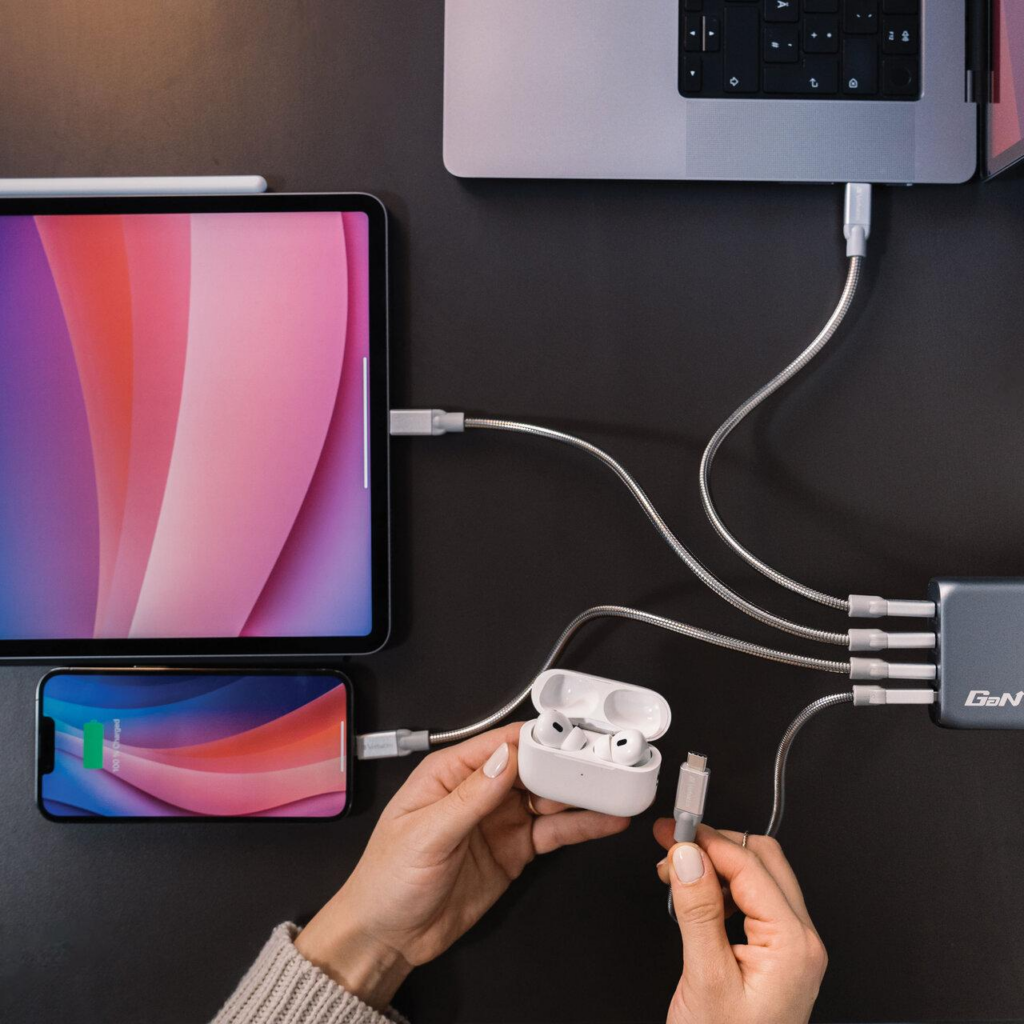
- USB-C Power Delivery (PD)
- Smart power negotiation
This means the charger:
- Detects your device (phone, laptop, tablet)
- Adjusts voltage and current accordingly
For example:
- 5V for small devices
- 20V for laptops
GaN Power Electronics Basics (Why It’s Better Than Silicon)
To understand the bigger picture, let’s simplify GaN power electronics basics.
Material Advantage
Gallium Nitride has properties that make it superior to silicon:
- Higher electron mobility → faster current flow
- Higher breakdown voltage → handles more power safely
- Lower energy loss → improved efficiency
Thermal Performance
One of the biggest limitations of traditional chargers is heat.
GaN:
- Produces less heat
- Dissipates heat more efficiently
That’s why GaN chargers:
- Stay cooler
- Don’t need bulky heat sinks
- Can be smaller in size
Size Reduction
Because of high-frequency switching:
- Internal components shrink dramatically
- Transformers become smaller
- Overall charger size decreases
This is why a 65W GaN charger can be:
Smaller than an old 30W silicon charger
Real-World Example: What Happens When You Plug In
Let’s make this more tangible.
When you plug your laptop into a GaN charger:
- AC power enters the charger
- It’s converted into DC
- GaN transistors rapidly switch current at high frequency
- Energy is efficiently transferred through compact components
- The charger delivers optimized voltage to your device
All of this happens in milliseconds—with minimal energy loss.
Why GaN Chargers Are More Efficient
If you’re comparing technologies, here’s the practical takeaway:
| Feature | Silicon Charger | GaN Charger |
|---|---|---|
| Switching Speed | Slow | Ultra-fast |
| Heat Generation | High | Low |
| Size | Bulky | Compact |
| Efficiency | Moderate | High |
| Power Density | Low | High |
This is why GaN is becoming the standard in modern charging solutions.
Industry Insight: Where GaN is Heading
GaN technology isn’t just a trend—it’s becoming the foundation of next-generation power systems.
You’ll see it expanding into:
- Multi-port USB-C chargers
- Laptop and gaming power adapters
- Fast-charging stations
- Industrial power supplies
Manufacturers like SZJialu are already integrating GaN into high-efficiency charger designs, focusing on:
- Compact form factors
- Multi-device charging
- Stable high-power output
Final Thoughts
So, how does a GaN charger work?
At its core, it’s about faster, smarter, and more efficient power conversion.
By replacing silicon with Gallium Nitride:
- Switching speeds increase dramatically
- Energy loss is minimized
- Chargers become smaller and more powerful
If you’re upgrading your charging setup, GaN isn’t just an improvement—it’s a meaningful leap forward in power electronics.