If you search for “GaN vs PD charger”, most articles will tell you the same thing: one is a material, the other is a protocol.
That’s technically correct — but practically useless.
Because when people compare GaN charger vs PD charger, they’re not asking for textbook definitions. They’re asking:
- Why are GaN chargers more expensive?
- Does PD always mean fast charging?
- Why does a 65W charger sometimes charge slower than expected?
- And most importantly: what actually impacts real charging performance?
This guide answers those questions from a real-world, engineering-informed perspective, not just marketing language.
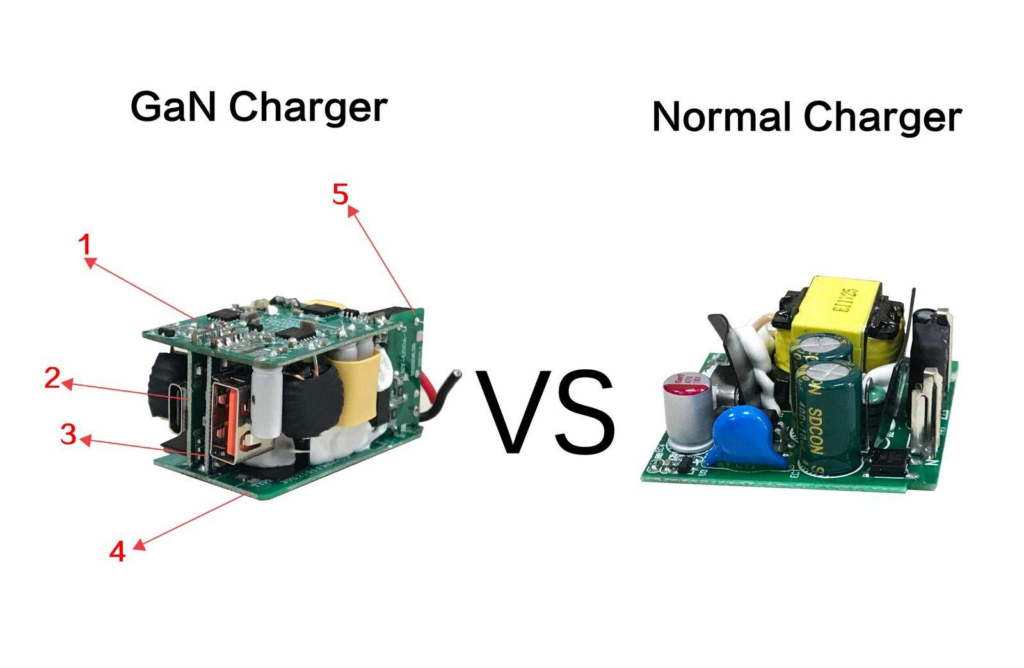
GaN vs PD Charger: The Difference That Actually Affects Performance
Instead of repeating definitions, let’s reframe the comparison in a way that actually matters:
- GaN influences how efficiently power is converted and managed
- PD influences how power is negotiated and distributed
In real usage, performance depends on how these two layers interact — not on either one alone.
This leads to a critical insight many buyers miss:
A charger can have PD and still perform poorly.
A charger can use GaN and still charge slowly.
The real difference is not GaN vs PD — it’s implementation quality.
Why Some “PD Chargers” Don’t Feel Fast
One of the most common complaints users have is:
“My PD charger doesn’t charge as fast as advertised.”
Here’s why that happens.
1. Power Profile Limitations
Not all PD chargers support the same voltage/current profiles.
For example, a laptop may require 20V/3.25A (65W), but some chargers only support:
- 5V / 9V / 12V
- Or limited current output
Even if it’s labeled “PD,” it may not deliver the specific profile your device needs.
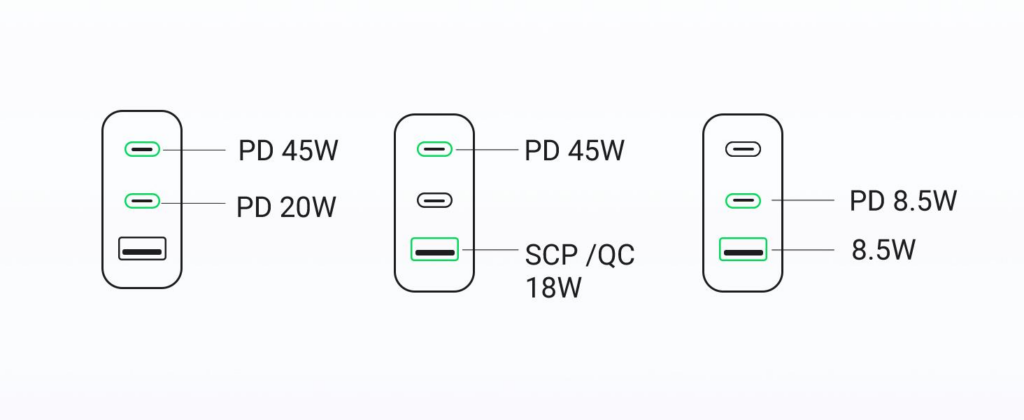
2. Multi-Port Power Splitting
Many modern chargers advertise high total wattage (like 100W), but:
- Plug in two devices → power is split
- Your laptop may drop from 65W to 45W or lower
This is where power allocation design becomes more important than the PD label itself.
3. Cable Bottlenecks
A surprisingly overlooked factor:
- Not all USB-C cables support full PD wattage
- Without an e-marker chip, many cables cap at 60W
So the “slow PD charging” problem is often not the charger at all.
Where GaN Actually Makes a Real Difference
Instead of just saying “GaN is smaller,” let’s talk about what actually changes in usage.
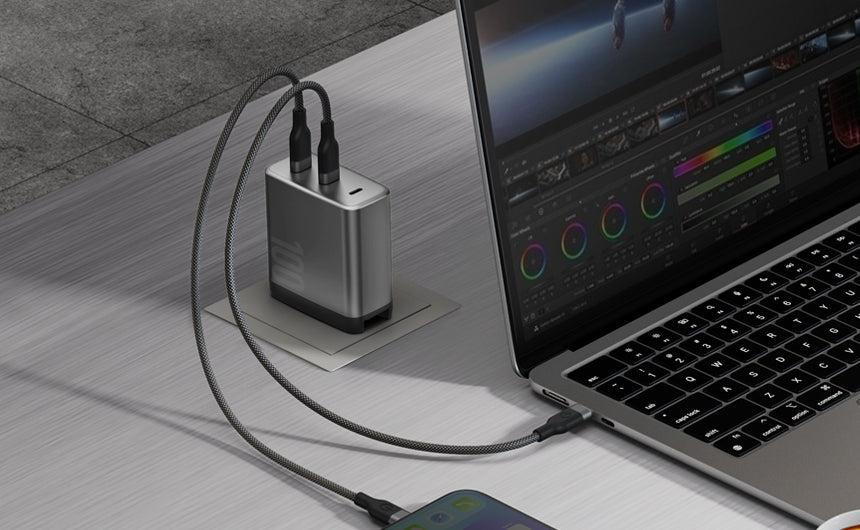
1. Thermal Stability Under Load
Traditional chargers often throttle performance when temperatures rise.
GaN-based designs:
- Handle higher switching frequencies
- Generate less heat under the same load
- Maintain stable output for longer sessions
This is especially noticeable when:
- Charging laptops for extended periods
- Running multiple devices simultaneously
2. Power Density (Not Just Size)
The real advantage isn’t just smaller size — it’s more power in the same space.
This enables:
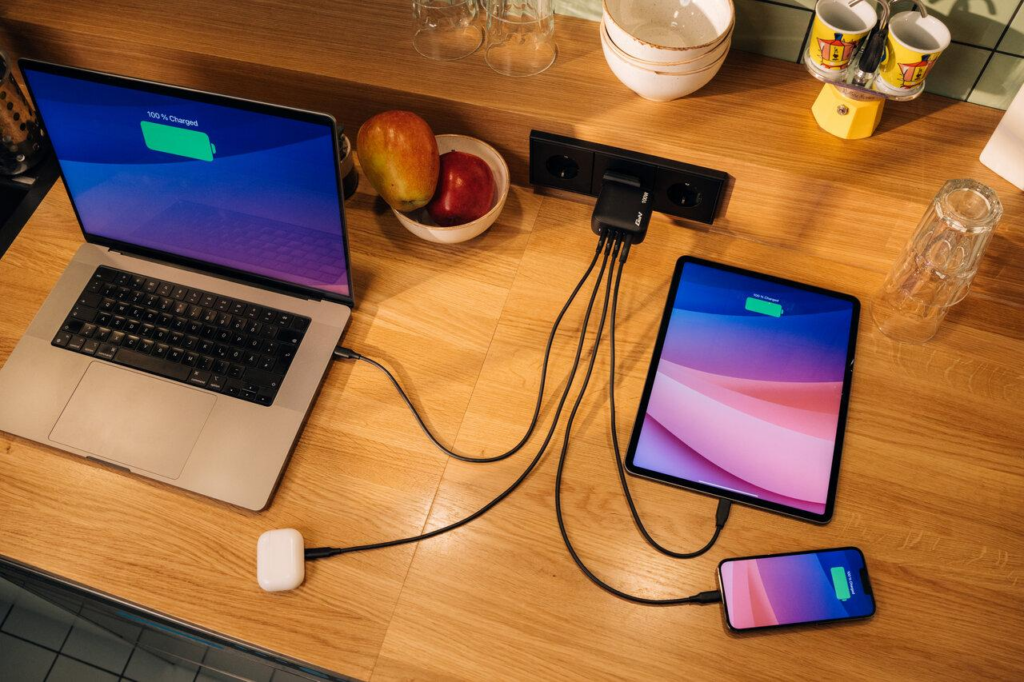
- Multi-port fast charging without huge adapters
- Travel-friendly setups replacing multiple chargers
3. Efficiency at Partial Loads
In real life, chargers rarely operate at full load.
GaN chargers tend to be more efficient at:
- 20–50% load range (typical daily use)
- Reducing wasted energy and heat
This is rarely mentioned in typical blog posts — but it directly impacts long-term reliability.
The Hidden Trade-Offs No One Talks About
GaN Is Not Automatically “Better”
Some lower-quality GaN chargers suffer from:
- Aggressive miniaturization → thermal stress
- Poor internal layout → unstable output
- Inconsistent quality control
So while GaN enables better designs, it also raises the engineering bar.
PD Compatibility Is Still Fragmented
Despite being a “standard,” PD implementation varies:
- Some brands prioritize proprietary fast charging
- Some devices limit third-party PD performance
- PPS (Programmable Power Supply) adds another layer of complexity
So “PD supported” does not guarantee optimized charging for every device.
GaN vs PD Charger: A Practical Buying Framework
Instead of asking “which is better,” use this decision logic:
If You Care About Portability and Efficiency
Choose:
- GaN-based charger
- Compact design with high wattage
- Ideal for travel and multi-device users
If You Care About Compatibility and Fast Charging
Check:
- PD profiles (not just “PD supported”)
- PPS support (for modern smartphones)
- Single-port vs multi-port output behavior
If You Want the Best Overall Setup
Look for a charger that:
- Uses GaN for efficiency
- Supports full PD profiles (including 20V outputs)
- Has intelligent power distribution
A More Realistic Conclusion
“GaN vs PD charger” is not a real comparison — it’s a misunderstanding of two different layers of technology.
What actually matters is this:
- GaN improves how power is handled
- PD improves how power is delivered
- Your experience depends on how well both are implemented together
So the best charger is not defined by a label.
It’s defined by engineering quality, power design, and real compatibility with your devices.
FAQ (Optimized for Featured Snippets)
Is GaN better than PD chargers?
They are not directly comparable. GaN affects hardware efficiency, while PD affects charging protocols.
Why is my PD charger slow?
Possible reasons include limited power profiles, cable restrictions, or power sharing in multi-port chargers.
Do I need both GaN and PD?
For most modern users, yes. A charger that combines both offers better efficiency and compatibility.
Are all GaN chargers fast?
No. Charging speed depends on PD support, wattage, and device compatibility — not GaN alone.