As laptops become thinner and more powerful, charging technology has had to evolve fast. In 2026, 100W USB-C Power Delivery (PD) chargers are the mainstream standard for ultrabooks, MacBooks, and even many professional workstations.
But not all 100W chargers are created equal.
Some are optimized for portability, some for multi-device charging, and others for long-term business deployment and OEM integration. This guide breaks down what truly matters when choosing a high-quality 100W charger—and how to pick the right one for personal or business use.
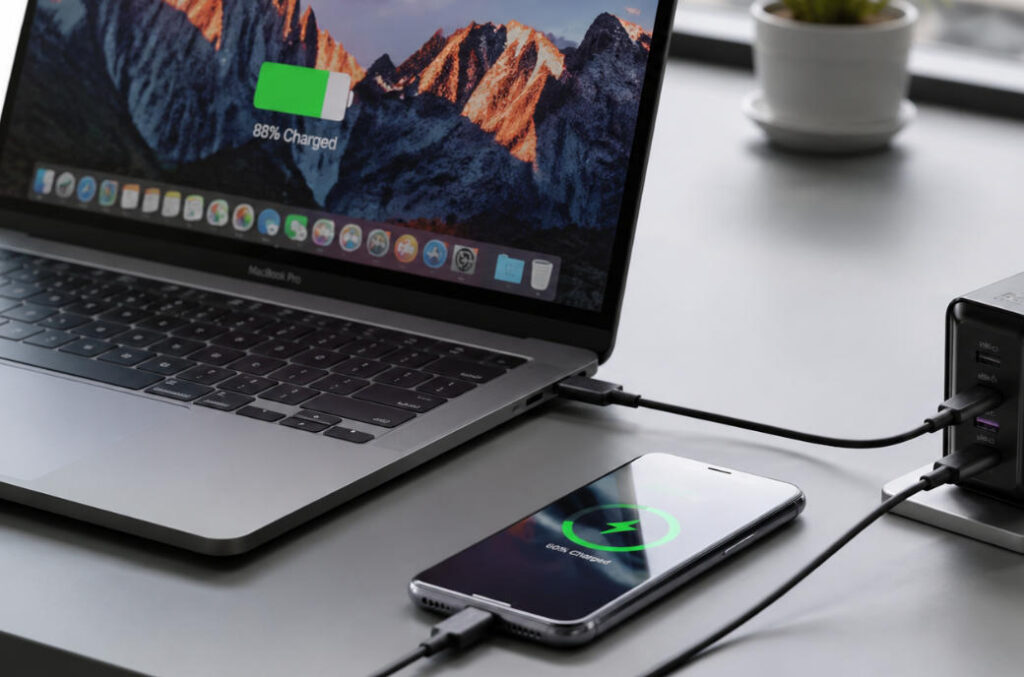
1. What Makes a Good Laptop Charger in 2026?
A “good” laptop charger is no longer just about wattage. In 2026, it is defined by efficiency, safety, protocol support, and thermal control.
1.1 Stable 100W Output via USB-C PD 3.0 / 3.1
Modern laptops require dynamic power negotiation. A high-quality charger should support:
- USB-C PD 3.0 or PD 3.1
- Fixed profiles like 5V, 9V, 15V, 20V
- Optional Extended Power Range (EPR) for newer devices
This ensures compatibility with devices like MacBook Pro, Dell XPS, Lenovo ThinkPad, and high-performance ultrabooks.
1.2 Intelligent Power Distribution
If the charger has multiple ports, it must intelligently allocate power.
Example:
- 1 device: full 100W
- 2 devices: dynamic split (e.g., 65W + 30W)
Poor power distribution leads to unstable charging or throttling.
1.3 Thermal Efficiency (GaN Technology)
Most premium chargers now use GaN (Gallium Nitride) instead of silicon.
Benefits include:
- Lower heat generation
- Smaller size
- Higher conversion efficiency (typically 90%+)
This is especially important for long-hour business usage.
1.4 Safety Protection System
A reliable charger must include:
- Over-voltage protection
- Over-current protection
- Short-circuit protection
- Temperature control
- Surge protection
These systems ensure both laptop battery health and long-term device safety.
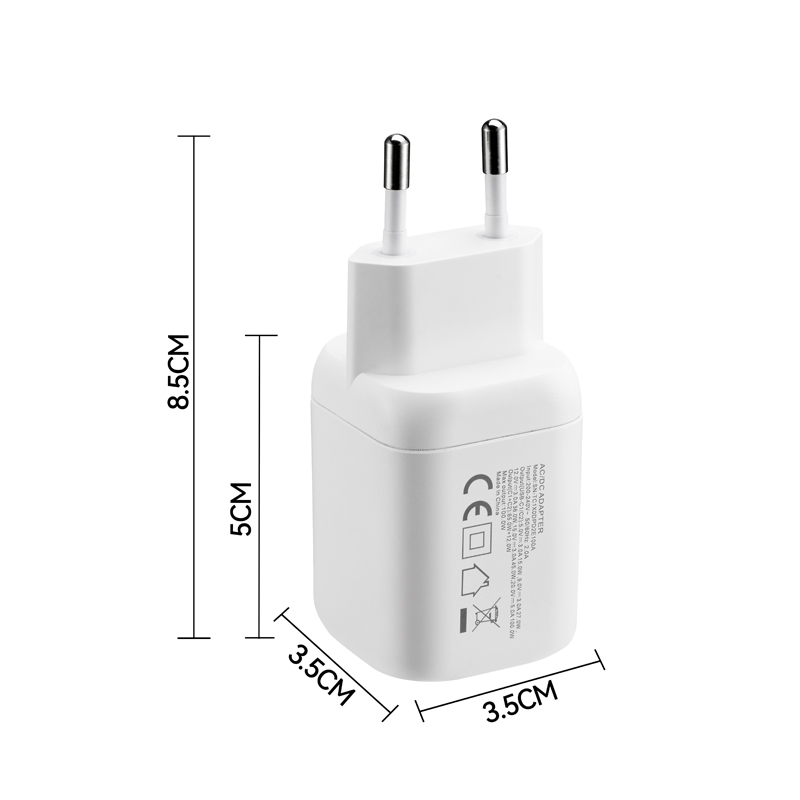
2. Top Features to Look for in 100W USB-C Chargers
When evaluating chargers in 2026, focus on these core technical and usability factors.
2.1 Compact GaN Design
Modern users prefer chargers that are:
- Pocket-sized
- Travel-friendly
- Foldable plug design
GaN chargers dominate this category due to higher efficiency and smaller heat sinks.
2.2 Multi-Port Flexibility (USB-C + USB-A)
A strong 100W charger usually includes:
- 2–3 USB-C ports
- Optional USB-A legacy port
This is essential for users charging:
- Laptop
- Smartphone
- Earbuds
- Tablet simultaneously
2.3 Fast Charging Protocol Compatibility
Look for wide protocol support:
- USB Power Delivery (PD)
- PPS (Programmable Power Supply) for Samsung devices
- QC (Quick Charge) for legacy Android devices
Without these, charging speed may be limited even if wattage is high.
2.4 Intelligent Chipset Control
High-end chargers use smart IC chips that:
- Detect device requirements
- Adjust voltage in real time
- Prevent overheating
This is a key difference between premium and low-cost chargers.
2.5 Build Quality and Certification
For business-grade use, certifications matter:
- CE / FCC / UKCA
- UL safety standards
- RoHS compliance
These ensure compliance for international distribution and OEM/ODM projects.
3. Recommended Use Cases for 100W PD Chargers
A 100W charger is not just for laptops—it has become a multi-device power hub.
3.1 Business Professionals
Ideal for:
- MacBook Pro / Air users
- Remote workers
- Frequent travelers
One charger replaces multiple adapters.
3.2 Creative Professionals
Designers, video editors, and engineers benefit from:
- Stable high-power output
- Simultaneous charging of laptop + tablet
3.3 Office Deployment
Companies increasingly standardize:
- Universal USB-C charging docks
- Shared workstation chargers
This reduces procurement complexity and improves compatibility.
3.4 Travel and Aviation Use
Airline-friendly chargers (compact GaN 100W) are ideal for:
- Business trips
- International travel
- Co-working environments
4. Buying Guide for Business Users (OEM / Wholesale Perspective)
For B2B buyers, the decision is very different from retail users. The focus shifts from “features” to reliability, scalability, and customization.
4.1 Key Procurement Criteria
Business buyers should evaluate:
- Production capacity (monthly output)
- Failure rate control (<0.5% ideal)
- Long-term supply stability
- Custom branding (logo / shell / packaging)
- MOQ flexibility
4.2 OEM/ODM Customization Options
Advanced manufacturers can offer:
- Custom housing design
- Multi-port configuration tuning
- Firmware power allocation customization
- Private mold development
This is especially important for building private label charger brands.
4.3 Cost vs Quality Balance
Low-cost chargers often reduce:
- Internal heat dissipation design
- Safety IC quality
- Component lifespan
For business distribution, this leads to higher return rates and brand damage.
4.4 Certification for Global Markets
Different markets require different compliance:
- North America: UL / FCC
- Europe: CE / UKCA
- Asia: CCC / PSE / KC
Without certification, market entry is limited.
4.5 Supply Chain Stability
A reliable supplier should provide:
- Consistent chipset sourcing
- Stable GaN component supply
- Predictable lead time (15–30 days typical)
5. Leading 100W USB-C Charger Brands (Market Overview)
In 2026, the global market is dominated by several key players:
- Anker — Known for premium GaN chargers and strong global retail presence
- UGREEN — Strong value-performance ratio, widely used for multi-port chargers
- Baseus — Focus on design innovation and fast charging ecosystems
- Apple — Provides official 100W USB-C power adapter for MacBook Pro
- Lenovo — OEM-grade chargers for ThinkPad and workstation laptops
These brands represent the consumer market baseline, but many OEM factories in China provide the actual manufacturing behind private label chargers for global distributors.
6. Future Trends of 100W Laptop Chargers (2026 and Beyond)
The next generation of chargers is evolving toward:
6.1 GaN 3.0 / Higher Efficiency Chips
Expect:
- Smaller size
- Higher power density
- Better thermal control
6.2 USB-C Universal Ecosystem
USB-C is becoming the only standard for:
- Laptops
- Tablets
- Phones
- Gaming devices
6.3 AI-Based Power Management
Future chargers may include:
- Smart load prediction
- Device recognition optimization
- Battery health protection algorithms
6.4 One Charger for Everything
The market is moving toward:
One 100W charger replacing all traditional adapters.
Conclusion
A high-quality 100W USB-C PD charger in 2026 is no longer just a power adapter—it is a multi-device energy management tool.
For consumers, the focus is portability, safety, and compatibility.
For business buyers, the focus is stability, certification, and OEM scalability.
Whether choosing from global brands like Anker or sourcing from OEM manufacturers, understanding the technical foundation of PD charging ensures better long-term performance and lower risk.