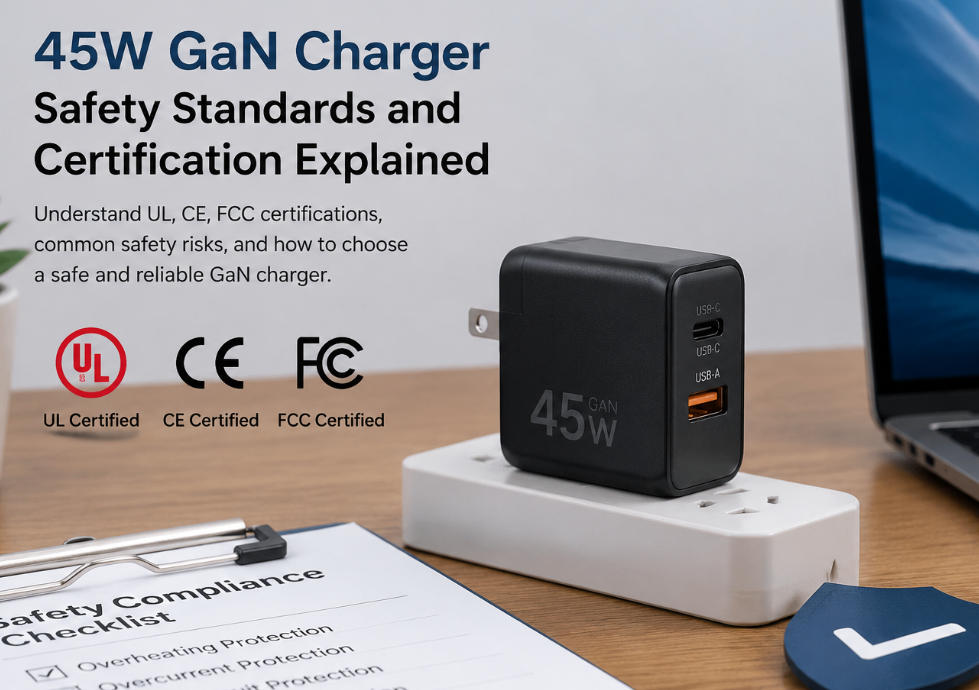
As GaN (Gallium Nitride) chargers become increasingly popular for their compact size and high efficiency, understanding safety standards and certifications is essential for both individual users and enterprise buyers. A 45W GaN charger delivers significant power in a small form factor, making compliance with safety regulations crucial to prevent accidents and ensure reliability.
Understanding UL, CE, and FCC Certifications
When evaluating 45W GaN chargers, certifications such as UL, CE, and FCC are key indicators of safety and quality. Each serves a different purpose and offers assurance for specific markets:
- UL (Underwriters Laboratories): Primarily recognized in the United States, UL certification ensures a charger meets rigorous safety standards, including electrical safety, fire resistance, and protection against overcurrent.
- CE (Conformité Européenne): Required for the European market, CE marking signifies compliance with EU safety, health, and environmental standards. It confirms that the product has been assessed for risks such as electrical shock, overheating, and electromagnetic compatibility.
- FCC (Federal Communications Commission): Focused on electromagnetic interference, FCC certification ensures that the charger does not disrupt other electronic devices and complies with U.S. emission standards.
Understanding these certifications allows businesses and consumers to distinguish between reliable chargers and uncertified, potentially hazardous products.
Common Safety Risks in High-Power GaN Chargers
While GaN technology enables smaller, more efficient chargers, high-power devices also carry specific safety risks if not properly designed or certified:
- Overheating: Rapid charging generates heat. Without proper thermal management, a charger can overheat, potentially damaging connected devices or posing a fire risk.
- Overcurrent: Excess current can damage devices or lead to electrical hazards. Certified chargers include overcurrent protection circuits to prevent such issues.
- Short Circuit: A short circuit in an unprotected charger can cause sparks, fires, or permanent damage. Certified products are rigorously tested to handle fault conditions safely.
Recognizing these risks is essential when selecting a 45W GaN charger for either personal use or enterprise deployment.

Choosing a Safe and Reliable 45W GaN Charger
When selecting a 45W GaN charger, consider the following guidelines to ensure safety and reliability:
- Check for Certification Labels: Look for UL, CE, or FCC marks, depending on your region. Avoid chargers without verified certification.
- Review Manufacturer Reputation: Reputable manufacturers often provide detailed safety test reports and warranty information.
- Verify Build Quality: High-quality materials, proper heat dissipation design, and compact yet robust construction reduce the risk of failure.
- Compatibility and Power Management: Ensure the charger intelligently manages power distribution for multiple devices, preventing overloading.
For enterprises purchasing chargers in bulk, prioritizing certified devices reduces liability and ensures compliance with workplace safety regulations.
Enterprise Guide: Safety Considerations for Bulk Purchases
Businesses sourcing 45W GaN chargers should establish a procurement checklist emphasizing safety:
- Certification Verification: Request official UL, CE, or FCC documentation for each model.
- Testing Reports: Look for third-party test reports covering overcurrent, overvoltage, and thermal safety.
- Quality Assurance: Select manufacturers with ISO 9001 certification or similar quality management systems.
- Warranty and Support: Ensure the supplier provides robust after-sales support, including replacement or repair for defective units.
By adhering to these guidelines, organizations can secure high-performance chargers without compromising safety, enhancing both employee satisfaction and operational efficiency.
Conclusion:
A 45W GaN charger combines convenience and power, but safety cannot be overlooked. Certifications like UL, CE, and FCC provide essential assurances, while careful attention to design, manufacturer reputation, and enterprise-level procurement standards ensures reliable, hazard-free performance. Whether for individual use or bulk enterprise deployment, selecting a certified GaN charger is a critical step in safe, efficient device charging.