If you’ve ever picked up a tiny charger and thought, “There’s no way this can power my laptop,” you’re not alone. For years, size was directly associated with strength in power adapters. Bigger bricks meant more power—simple as that.
But in 2026, that assumption doesn’t hold up anymore.
Thanks to advancements in GaN technology and smarter power design, compact chargers are no longer “weaker alternatives.” In fact, many of them outperform older, bulkier models.
So let’s break it down properly: Do smaller chargers mean less power? Or is that just a myth?

The Short Answer: Size ≠ Power
A charger’s physical size does not directly determine its power output.
What really matters is:
- Maximum wattage (e.g., 30W, 65W, 100W)
- Internal power conversion efficiency
- Thermal management design
- Charging protocols (USB-C PD, PPS, etc.)
A well-engineered compact charger can deliver the same—or even better—performance than a larger one.
This is exactly why small charger power output is becoming a major search topic: users are realizing that compact doesn’t mean compromised anymore.
Why Older Chargers Were So Big
To understand the shift, we need to look back.
Traditional silicon-based chargers required:
- Larger transformers
- More spacing between components
- Bigger heat dissipation areas
This made high-power chargers bulky and heavy. So naturally, people linked size with performance.
That’s where the misconception started—and why the “GaN charger vs size myth” still exists today.
What Changed: The Rise of GaN Technology
Gallium Nitride (GaN) is the key reason chargers have become smaller without losing power.
Compared to traditional silicon, GaN components:
- Switch faster
- Waste less energy as heat
- Require fewer and smaller components
This allows manufacturers to design high-efficiency, compact chargers that still deliver serious wattage.
For example, modern GaN chargers from brands like SZJialu are designed to balance:
- High output (65W–100W)
- Multi-device charging
- Compact form factor
Instead of just shrinking size, the goal is optimizing compact charger performance in real-world use.
Does Size Affect Charger Wattage?
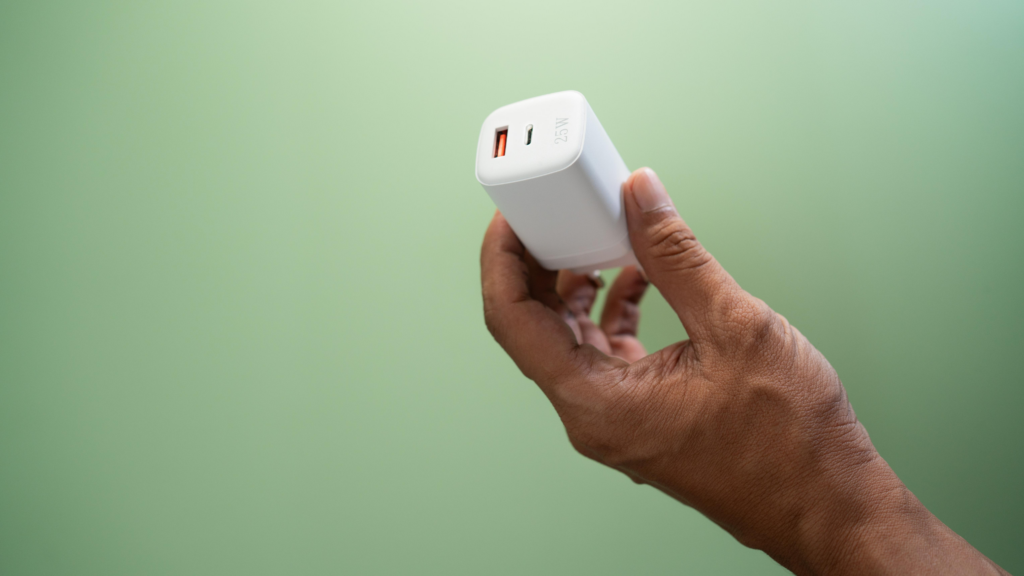
Technically, size can influence design—but it does not define wattage.
Here’s the reality:
- A large charger can still be inefficient
- A small charger can still deliver 100W
- The internal architecture matters far more than outer size
So when people ask “does size affect charger wattage?”, the correct answer is:
Size affects how a charger is built—not how powerful it can be.
Real-World Performance: What Actually Matters
When choosing a charger, especially for laptops and multi-device setups, you should focus on performance factors—not dimensions.
1. Stable Power Output
A good charger maintains consistent voltage even under load.
2. Multi-Port Distribution
A 100W charger doesn’t always mean 100W per port. Smart power allocation is key.
3. Thermal Control
Compact chargers must handle heat efficiently. This is where quality design stands out.
4. Protocol Compatibility
Support for USB-C Power Delivery (PD), PPS, and fast-charging standards ensures real performance.
This is where manufacturers like SZJialu differentiate themselves—by focusing not just on size, but usable power in real scenarios.
When Smaller Chargers Might Fall Short
Not all compact chargers are created equal.
A very small charger can underperform if:
- It lacks proper thermal design
- It uses low-quality components
- It exaggerates wattage ratings
- It doesn’t support proper fast-charging protocols
So yes, a tiny charger can be weak—but that’s not because it’s small. It’s because it’s poorly built.
Compact Charger Performance: What You Should Expect in 2026
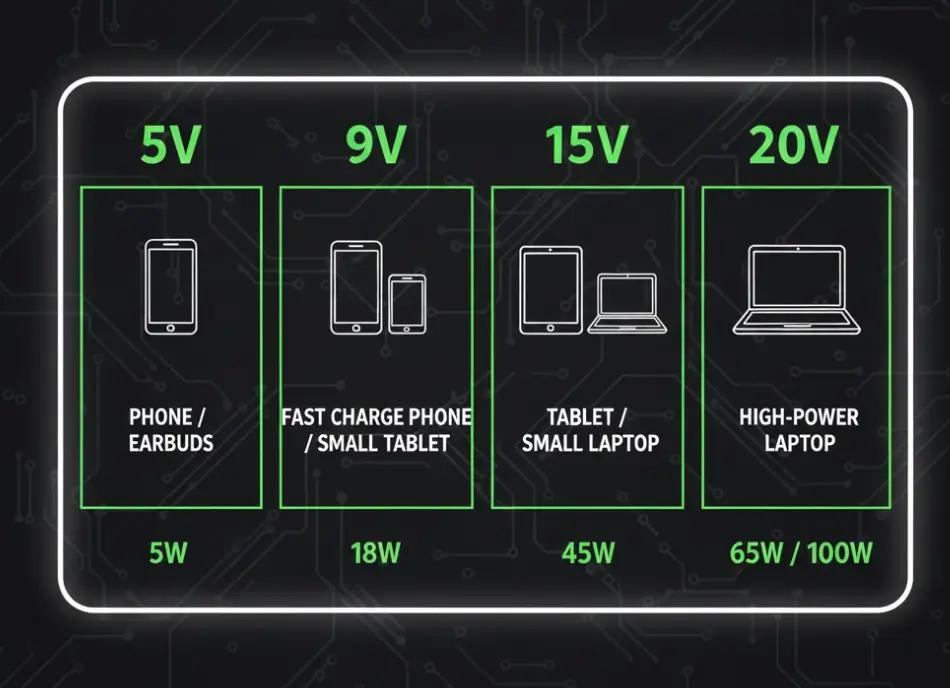
Today’s high-quality compact chargers can easily handle:
- 20W–30W → Fast phone charging
- 45W–65W → Tablets and ultrabooks
- 100W+ → Laptops, multi-device setups
Modern GaN chargers are now replacing traditional laptop adapters entirely.
This is why compact charger performance is no longer a trade-off—it’s often an upgrade.
Practical Example: Travel & Multi-Device Setup
Imagine this setup:
- Smartphone
- Tablet
- Laptop
In the past, you’d need:
- 2–3 separate chargers
- A bulky power strip
- Extra cables
Now, a single compact GaN charger can handle everything.
That’s the real advantage—not just smaller size, but simplified power management.
The Truth Behind the “Bigger Is Better” Myth
Let’s be clear:
- Bigger does not mean more powerful
- Smaller does not mean weaker
- Design and technology matter most
The GaN charger vs size myth persists because people still judge chargers visually. But in reality, performance is engineered—not measured by size.
Why More Users Are Switching to Compact Chargers
Based on current trends, users are choosing compact chargers because they offer:
- Portability (ideal for travel and daily carry)
- High efficiency (less energy waste)
- Multi-port convenience
- Clean desk setups
For professionals, digital nomads, and everyday users, compact chargers are quickly becoming the standard.
Final Thoughts
So, do smaller chargers mean less power?
No—and in many cases, they’re actually better.
With modern GaN technology and advanced engineering, compact chargers now deliver:
- High wattage
- Stable performance
- Better efficiency
- Smaller, more practical designs
If you’re evaluating small charger power output or wondering “does size affect charger wattage”, the key takeaway is simple:
Don’t judge a charger by its size—judge it by its design, specs, and real-world performance.
FAQ (SEO-Optimized)
Do smaller chargers charge slower?
No. Charging speed depends on wattage and protocol support, not size.
Is a compact charger safe for laptops?
Yes, as long as it provides sufficient wattage (e.g., 65W or 100W) and supports USB-C PD.
Why are GaN chargers smaller?
Because they use more efficient materials that reduce heat and component size.
Can one small charger power multiple devices?
Yes, many modern multi-port GaN chargers are designed exactly for that purpose.