In commercial and industrial electronics, selecting the correct power adapter is a critical design and procurement decision. Whether you are developing embedded systems, deploying network infrastructure, or sourcing components for large-scale manufacturing, understanding the differences between an AC power adapter and a DC power adapter directly impacts system reliability, safety compliance, and long-term performance.
This guide provides a clear, engineering-focused comparison of AC and DC power adapters, including electrical characteristics, application scenarios, and selection criteria relevant to OEMs, system integrators, and procurement teams.

AC Power Adapter: Technical Overview
An AC power adapter accepts alternating current (AC) from the electrical grid—typically 100–240V AC—and converts it into a voltage level suitable for downstream electronics. In most modern designs, AC adapters internally convert AC to regulated DC output using switching power supply topologies.
Key Engineering Characteristics
- Wide input voltage range for global deployment
- Integrated rectification and voltage regulation
- Electrical isolation for compliance and safety
- Designed for stable operation under variable load conditions
Common B2B search intent includes:
- AC power adapter for industrial equipment
- Universal AC adapter input range
- AC power adapter efficiency standards
AC power adapters are commonly used in networking hardware, displays, office equipment, kiosks, and control systems.
DC Power Adapter: Technical Overview
A DC power adapter supplies direct current (DC) at a defined voltage and current level. These adapters are frequently used when the system architecture requires a stable DC input sourced from either an AC-to-DC converter or a DC power source such as batteries or solar systems.
Typical DC Adapter Specifications
- Fixed DC output (e.g., 5V, 12V, 24V, 48V)
- High voltage stability and low ripple
- Suitable for sensitive electronic circuits
- Compatible with embedded and low-voltage systems
Frequently searched long-tail terms include:
- DC power adapter for embedded systems
- 12V DC power adapter industrial use
- DC adapter current rating selection
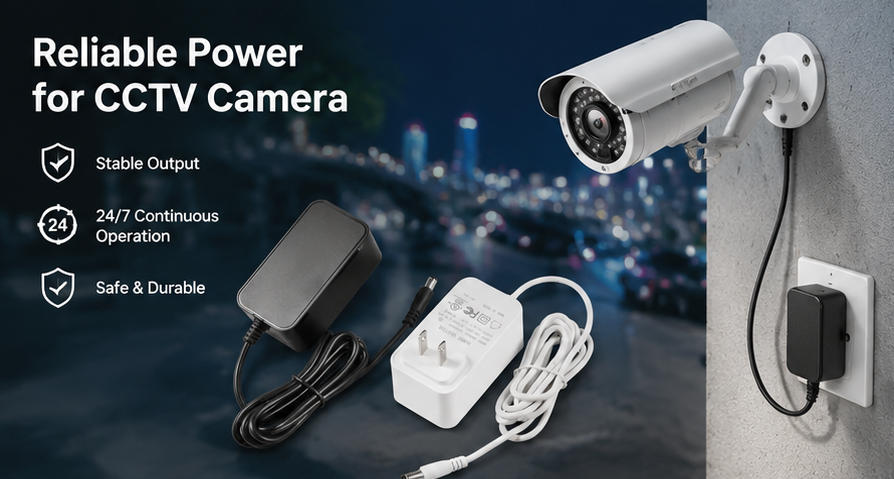
DC power adapters are widely deployed in LED lighting systems, security cameras, POS terminals, IoT devices, and automation equipment.
AC vs DC Power Adapters: Engineering Comparison
1. Power Input and Output Characteristics
- AC Power Adapter: Accepts AC input; output may be AC or DC depending on system design
- DC Power Adapter: Provides DC output only, with defined voltage polarity
Most electronic devices ultimately require DC power, even if an AC adapter is used upstream.
2. Voltage Regulation and Signal Integrity
DC power adapters offer superior voltage stability, making them ideal for:
- Microprocessors
- Communication modules
- Sensor-based systems
Poor voltage regulation or excessive ripple can introduce noise, reduce performance, or cause premature component failure.
3. Deployment Environment
| Application Environment | Recommended Adapter |
|---|---|
| Global office or IT equipment | AC power adapter |
| Embedded electronics | DC power adapter |
| LED and lighting systems | DC power adapter |
| Industrial control panels | AC or DC (system-dependent) |
| Automotive or mobile systems | DC power adapter |
Why DC Power Is Preferred in Electronic System Design
From an engineering perspective, DC power is preferred because:
- Semiconductors operate on unidirectional current
- DC allows precise voltage and current control
- Energy storage systems (batteries, supercapacitors) are DC-based
As a result, AC power adapters almost always include an internal AC-to-DC conversion stage.
Selection Criteria for B2B and Engineering Teams
1. Electrical Specifications
Always validate:
- Input voltage range
- Output voltage tolerance
- Output current margin (recommended ≥20% headroom)
Relevant search terms:
- How to size a power adapter
- Power adapter voltage and current calculation
2. Load Profile and Operating Conditions
Consider:
- Continuous vs peak load
- Ambient temperature range
- Installation environment (indoor, outdoor, enclosed)
Adapters designed for consumer use may not meet industrial reliability requirements.
3. Compliance and Certification
For commercial deployment, ensure the power adapter meets applicable standards:
- UL / ETL for North America
- CE / LVD / EMC for Europe
- FCC for electromagnetic compatibility
- RoHS for environmental compliance
Certified adapters reduce regulatory risk and simplify global market entry.
Efficiency and Thermal Performance
Modern AC and DC power adapters typically use high-efficiency switching power supply (SMPS) designs, offering:
- Higher conversion efficiency
- Reduced thermal stress
- Lower total cost of ownership (TCO)
Efficiency is especially critical in high-volume deployments and always-on systems.
AC vs DC Power Adapter: Procurement Recommendations
For B2B buyers:
- Select AC power adapters for standardized, grid-connected systems requiring global compatibility.
- Select DC power adapters when integrating directly with low-voltage electronics or DC-based power architectures.
Clear specification alignment between the adapter and the system design reduces failure rates, warranty claims, and maintenance costs.
For engineers and B2B decision-makers, the choice between an AC power adapter and a DC power adapter is not merely a form factor decision—it is a system-level consideration that affects performance, safety, and scalability.
By evaluating electrical specifications, application requirements, and regulatory standards, organizations can ensure reliable power delivery and long-term operational success.