If you’ve been shopping for a new charger recently, you’ve probably seen the term GaN charger everywhere. It’s often marketed as smaller, faster, and more efficient than traditional chargers—but what does that actually mean?
More importantly: Is a GaN charger really better than a silicon charger, or is it just hype?
In this guide, we’ll break down the real differences between GaN vs silicon chargers, using practical insights—not just specs—so you can make the right choice.
GaN vs Silicon Charger: Core Differences
Let’s get straight to what matters.
1. Efficiency Comparison
The biggest advantage in the GaN vs silicon efficiency comparison is energy conversion.
- Silicon chargers: ~85–90% efficiency
- GaN chargers: ~90–95% efficiency
That may seem small, but in real-world usage:
- Less energy wasted as heat
- Faster charging stability
- Lower electricity consumption over time
This is why GaN chargers stay noticeably cooler.
2. Size and Portability
One of the most obvious differences:
- Silicon chargers require larger transformers and heat dissipation space
- GaN chargers can operate at higher frequencies, reducing component size
Result:
A 65W GaN charger can be 50% smaller than a traditional laptop charger.
For travelers or daily carry, this is a huge upgrade.
3. Heat Management
Heat is where silicon struggles.
- Silicon → more resistance → more heat
- GaN → lower resistance → less heat
Why it matters:
- Safer long-term use
- Better lifespan
- Consistent performance under load
4. Charging Speed & Power Delivery
Both technologies support fast charging—but GaN does it better under pressure.
- Silicon chargers can throttle under high load
- GaN chargers maintain stable high-watt output
This is especially important for:
- MacBooks / laptops
- Multi-device charging setups
- 100W+ fast charging scenarios
5. Multi-Port Performance
Modern users don’t charge just one device anymore.
GaN chargers are designed for:
- Smart power distribution
- Multiple USB-C + USB-A ports
- Simultaneous fast charging
Traditional chargers:
- Often single-port
- Limited power allocation
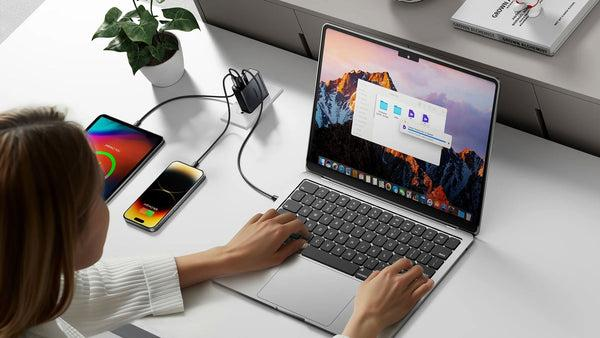
Is GaN Charger Better Than Silicon?
Short answer: Yes—for most users.
But let’s be realistic.
When GaN is Better:
- You want a compact charger
- You need fast charging (PD / USB-C)
- You charge multiple devices
- You travel frequently
When Silicon Still Works:
- Low-power devices (under 18W)
- Budget-sensitive purchases
- Simple, single-device charging
Real-World Use Case Comparison
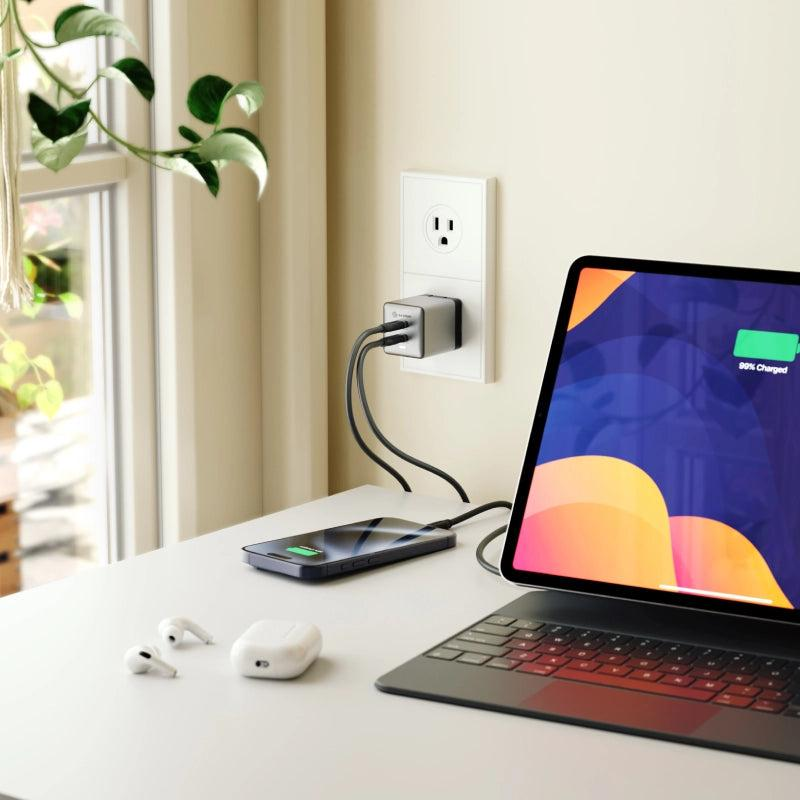
Scenario 1: Laptop + Phone + Earbuds
- Silicon charger → multiple adapters needed
- GaN charger → one compact multi-port charger
Scenario 2: Travel
- Silicon → bulky, heavy
- GaN → pocket-sized, universal
Scenario 3: Desk Setup
- Silicon → cluttered cables
- GaN → clean, centralized charging hub
Are There Any Downsides to GaN Chargers?
To keep things balanced:
- Slightly higher upfront cost
- Quality varies by manufacturer
- Cheap GaN chargers may lack safety features
This is why choosing a reliable supplier matters.
Industry Insight: Why GaN Is Taking Over
From a manufacturing perspective, GaN is not just a trend—it’s a technology shift.
Brands and OEM manufacturers are moving toward GaN because:
- Higher energy efficiency standards
- Demand for smaller electronics
- Growth of USB-C Power Delivery ecosystem
Companies like SZJialu, which specialize in GaN and PD charger solutions, are focusing on:
- Compact multi-port designs
- High-wattage output (65W–140W)
- OEM/ODM customization for global markets
This reflects where the industry is heading.

Final Verdict: GaN vs Traditional Charger
If we sum it up:
| Feature | GaN Charger | Silicon Charger |
|---|---|---|
| Size | Smaller | Larger |
| Efficiency | Higher | Moderate |
| Heat | Lower | Higher |
| Speed | Faster & stable | Slower under load |
| Multi-port | Yes | Limited |
GaN clearly wins for modern charging needs.
Conclusion
The difference between GaN vs silicon chargers isn’t just technical—it directly affects how you charge your devices every day.
If you’re still using a traditional charger, upgrading to GaN means:
- Less clutter
- Faster charging
- Better portability
- Improved efficiency
And as devices continue to demand more power in smaller form factors, GaN isn’t just better—it’s becoming the new standard.