Most guides about LED power supplies will tell you the same things: match the voltage, calculate the wattage, and choose a certified product. That advice is correct—but also incomplete.
In real projects, especially when you move beyond small DIY setups into commercial lighting, architectural installations, or product integration, choosing the best power supply for LED lighting becomes less about basic specs and more about system thinking.
This guide takes a different approach. Instead of repeating generic rules, we’ll look at how experienced engineers, lighting designers, and manufacturers actually make decisions—along with a few overlooked factors that can significantly improve performance and reliability.
Think Beyond “Power Supply” — It’s a System Component
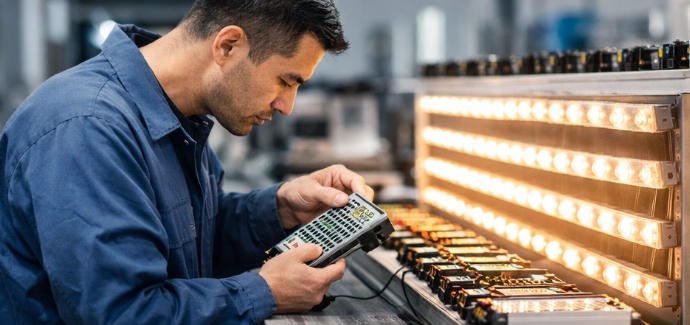
A common mistake is treating the power supply as a standalone accessory. In reality, it behaves more like the “heart” of your LED system.
Here’s the shift in mindset:
- Beginners ask: “What adapter do I need?”
- Professionals ask: “How will power behave across the entire lighting system over time?”
That includes:
- Cable length and voltage drop
- Ambient temperature and airflow
- Load fluctuations (especially with dimming)
- Long-term degradation
This is why two identical LED strip installations can perform very differently—simply because of the power supply choice.
Voltage Matching Is Basic—Voltage Stability Is Advanced
Yes, matching 12V or 24V is essential. But here’s what most articles don’t tell you: Voltage stability under load is far more important than nominal voltage.
In cheaper adapters, you’ll often see:
- Voltage sag under full load
- Flickering at startup
- Inconsistent brightness across LED strips
In higher-quality designs—typically from experienced LED power supply manufacturers—you get regulated output that stays stable even when:
- The load increases
- The temperature rises
- The system runs for long hours
This is where sourcing from a reliable factory or industrial-grade supplier makes a real difference, especially for projects like retail lighting or signage where consistency is visible.
Rethinking Wattage: Design for the “Invisible Load”
Most guides suggest adding 20–30% headroom. That’s good—but still a bit simplistic. A more advanced way to think about it: Design for invisible load factors
These include:
- Power loss in long cables
- Connector resistance
- Efficiency drop over time
- Environmental heat impact
For example, a 100W LED load in a warm commercial environment might behave like a 115W–120W load over time. So instead of just adding a buffer, think in terms of real operating conditions, not lab numbers.
12V vs 24V: It’s Not Just Efficiency—It’s Architecture
You’ve probably heard that 24V is better for longer runs. True—but the deeper reason is system architecture.
12V systems:
- Better for small, modular setups
- Easier for short-run installations
- Lower initial cost
24V systems:
- Reduce current → less heat in wires
- More stable over distance
- Better for large-scale or commercial layouts
Here’s the insight: Choosing between 12V and 24V is less about preference and more about how scalable your lighting system needs to be.
If there’s even a small chance your project will expand, 24V is usually the smarter long-term choice.

The Overlooked Factor: Transient Response
This is something rarely mentioned outside engineering discussions. Transient response refers to how quickly a power supply reacts to sudden changes—like:
- Turning LEDs on/off
- Dimming adjustments
- Load spikes
Poor transient response can cause:
- Brief flickers
- LED stress over time
- Reduced lifespan
High-quality LED drivers (often from established OEM/ODM power adapter manufacturers) are designed to smooth out these changes.
You won’t see this clearly listed on most product pages—but you will notice it in performance.
Heat Is the Silent System Killer
Everyone knows heat is bad—but few people design around it properly.
Instead of asking: “Is this power supply rated for 100W?”
Ask: “Can this power supply handle 100W continuously in my actual environment?”
For example:
- A 100W unit in a ventilated room ≠ 100W unit inside a sealed cabinet
- Outdoor installations may face both heat and humidity
This is why industrial LED power supply factories often emphasize:
- Thermal design
- Aluminum enclosures
- Derating curves
These are not marketing features—they directly affect lifespan.
Dimming Compatibility: Where Theory Meets Frustration
On paper, dimming sounds simple. In practice, it’s one of the most common sources of problems. The real issue isn’t just compatibility—it’s interaction between components.
For example:
- A power supply may support PWM
- A dimmer may output PWM
- But together, they may still flicker
Why?
Because frequency, load behavior, and internal circuitry all interact.
The takeaway:
Always think in terms of tested combinations, not just “compatible specs.”
A Practical Note on Choosing a Manufacturer
At some point, spec sheets stop being enough. This is where working with a specialized manufacturer becomes valuable—especially if you’re sourcing in bulk or building products.
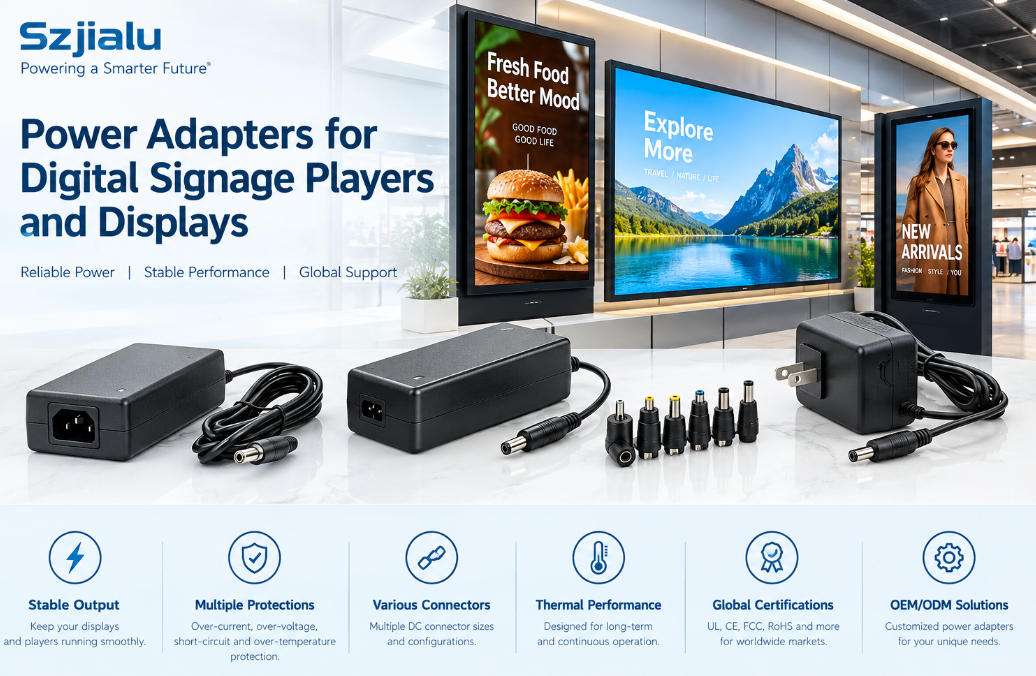
For example, companies like szjialu focus on power adapter and LED driver production with customization capabilities. Manufacturers like this typically offer:
- OEM/ODM LED power supply solutions
- Custom voltage and wattage configurations
- Better control over component quality
- More consistent production standards
This doesn’t just matter for large businesses. Even smaller buyers benefit from working with a factory that understands application-level requirements rather than just selling generic adapters.
The Hidden Advantage of “Over-Specifying”
Here’s a counterintuitive idea: Sometimes the best power supply is the one that feels “too big” for the job.
Not because you need the extra power—but because:
- It runs cooler
- It operates in a more efficient range
- It lasts significantly longer
This is especially useful in:
- Commercial lighting
- Continuous-use environments
- Hard-to-access installations
In these cases, maintenance cost matters more than initial cost.
Common Mistakes (From Real Projects)
Instead of repeating generic advice, here are mistakes that actually show up in real installations:
- Choosing based on price instead of stability
- Ignoring voltage drop in long LED strip runs
- Using indoor adapters for semi-outdoor environments
- Mixing dimming systems without testing
- Underestimating heat buildup in enclosed spaces
These are not beginner mistakes—they happen even in professional setups.
Final Thoughts: What “Best” Really Means
The best power supply for LED lighting is not defined by a single specification. It’s defined by how well it performs over time, under real conditions, within a complete system.
If you remember one thing, make it this: A good LED power supply doesn’t just power your lights—it protects your entire lighting investment.
And in many cases, the difference between a system that lasts 6 months and one that lasts 5 years comes down to this one decision.