Power efficiency has become one of the most important factors in modern charger design. As smartphones, laptops, tablets, and IoT devices demand faster charging and higher power delivery, the efficiency of a charger directly affects its performance, safety, and overall user experience.
Whether you are a device manufacturer, distributor, or end user, understanding how power efficiency influences charger performance can help you choose better charging solutions and improve device reliability.
In this article, we’ll explore what power efficiency means, why it matters in charger technology, and how it affects real-world charging performance.
What Is Power Efficiency in a Charger?
Power efficiency refers to how effectively a charger converts electrical energy from the wall outlet into usable power for a device.
In simple terms, it measures how much input energy is successfully delivered to the device versus how much is lost during the conversion process.
For example:
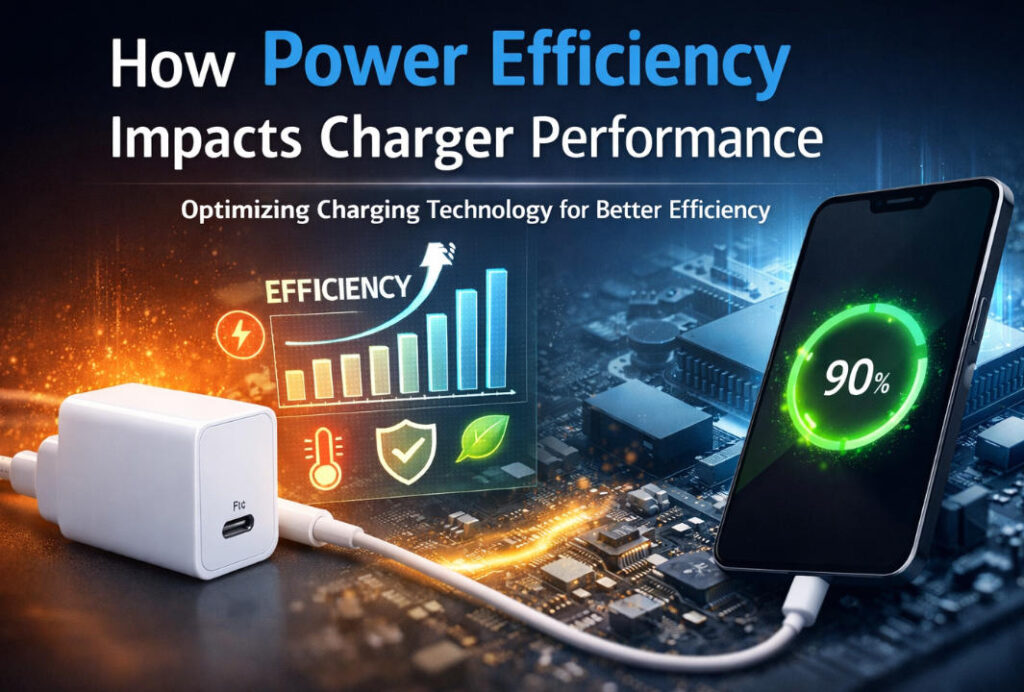
- If a charger draws 100 watts from the wall and delivers 90 watts to the device,
- The charger operates at 90% power efficiency.
The remaining 10% of energy is typically lost as heat during power conversion.
High-efficiency chargers reduce energy waste, improve safety, and provide more stable power output.
Why Power Efficiency Matters for Charger Performance
Power efficiency impacts several critical aspects of charger performance.
1. Faster and More Stable Charging
A high-efficiency charger can deliver power more consistently to the device.
This is especially important for modern technologies like:
- USB-C Power Delivery (PD) chargers
- Fast charging adapters
- High-wattage laptop chargers
If a charger loses too much energy during conversion, it may struggle to maintain stable voltage and current levels. This can result in slower charging speeds or fluctuating power output.
This is why many users search for terms like:
- high efficiency USB-C charger
- fast charging power adapter efficiency
- stable power delivery charger
2. Lower Heat Generation
One of the biggest side effects of low efficiency is excess heat.
When energy is lost during conversion, it typically becomes heat inside the charger’s internal components. Over time, excessive heat can:
- Reduce charger lifespan
- Damage internal components
- Affect charging stability
- Create potential safety risks
High-efficiency chargers convert more energy into usable power instead of heat, resulting in cooler operation and better reliability.
This is why many modern chargers focus on thermal efficiency and power conversion optimization.
3. Improved Device Safety
Efficient power conversion also improves device safety.
A charger with better power efficiency typically includes:
- Advanced power management circuits
- Stable voltage regulation
- Over-current protection
- Temperature monitoring
These features help prevent common charging issues such as:
- Overheating
- Voltage spikes
- Unstable current output
For manufacturers and OEM buyers, selecting a charger with high power conversion efficiency helps ensure safer device operation.
4. Reduced Energy Consumption
Energy efficiency has become increasingly important for both environmental and economic reasons.
Low-efficiency chargers waste electricity during every charging cycle. Across millions of devices worldwide, this wasted energy becomes significant.
High-efficiency chargers help reduce:
- Electricity consumption
- Energy costs
- Carbon emissions
This is why many countries require power adapters to meet strict energy efficiency standards, such as Level VI energy efficiency regulations.
5. Smaller and More Compact Charger Designs
Improved power efficiency also enables more compact charger designs.
When chargers waste less energy as heat, they require smaller heat dissipation components and less internal spacing. This allows engineers to design:
- Smaller wall chargers
- Lightweight USB-C power adapters
- Compact multi-port fast chargers
Technologies such as GaN (Gallium Nitride) semiconductors have dramatically improved power efficiency while reducing charger size.
As a result, many modern devices now use high-efficiency GaN chargers for fast charging applications.

Key Technologies That Improve Charger Efficiency
Several modern power technologies help improve charger efficiency.
GaN Power Technology
Gallium Nitride (GaN) components enable higher switching frequencies and lower power loss compared with traditional silicon components.
Benefits include:
- Higher conversion efficiency
- Smaller charger size
- Better heat management
- Faster charging capability
This is why many high-performance chargers today are GaN fast chargers.
Smart Power Management Chips
Modern chargers use advanced controller chips to regulate voltage, current, and power delivery dynamically.
These chips ensure:
- Optimized power conversion
- Stable output under different loads
- Reduced standby power consumption
High-Quality Internal Components
Efficiency also depends on component quality, including:
- Transformers
- Capacitors
- Power MOSFETs
- PCB design
Professional manufacturers focus on optimized circuit design and premium components to achieve higher efficiency ratings.
How to Choose a High-Efficiency Charger
When selecting a charger for consumer devices or OEM projects, several indicators can help determine efficiency.
Look for Energy Efficiency Certifications
Common standards include:
- DOE Level VI
- Energy Star compliance
- CEC efficiency requirements
These certifications ensure the charger meets minimum efficiency standards.
Check Conversion Efficiency Ratings
High-quality chargers typically achieve 85%–94% power conversion efficiency, depending on power level and design.
Higher efficiency generally means:
- Less heat
- Better performance
- Longer product lifespan
Choose Reliable Manufacturers
Charger performance depends heavily on manufacturing quality. Experienced OEM manufacturers invest in:
- advanced R&D
- strict quality control
- safety certification testing
- efficient power design
This ensures consistent charger performance in large-scale production.
The Future of High-Efficiency Charging
As consumer electronics continue to evolve, the demand for high-efficiency charging solutions will only increase.
Future charger technologies are likely to focus on:
- Higher efficiency GaN and GaN+ components
- Smarter power delivery protocols
- Multi-device charging optimization
- Energy-saving standby modes
For manufacturers and buyers alike, power efficiency will remain one of the most important factors influencing charger performance and reliability.