After working with power adapter projects for years—across consumer electronics, security systems, POS equipment, and industrial devices—I’ve noticed something interesting:
The debate between desktop power supply and wall chargers isn’t really about which one is “better.” It’s about choosing the right tool for the right application.
On paper, both convert AC to DC power. In reality, they serve very different product strategies.
If you’re developing a device, sourcing from an OEM power adapter manufacturer, or optimizing long-term reliability, the difference matters more than most people initially think.
Let’s break it down from a practical, industry perspective.
First, Understand the Structural Difference
What We Call a Desktop Power Supply
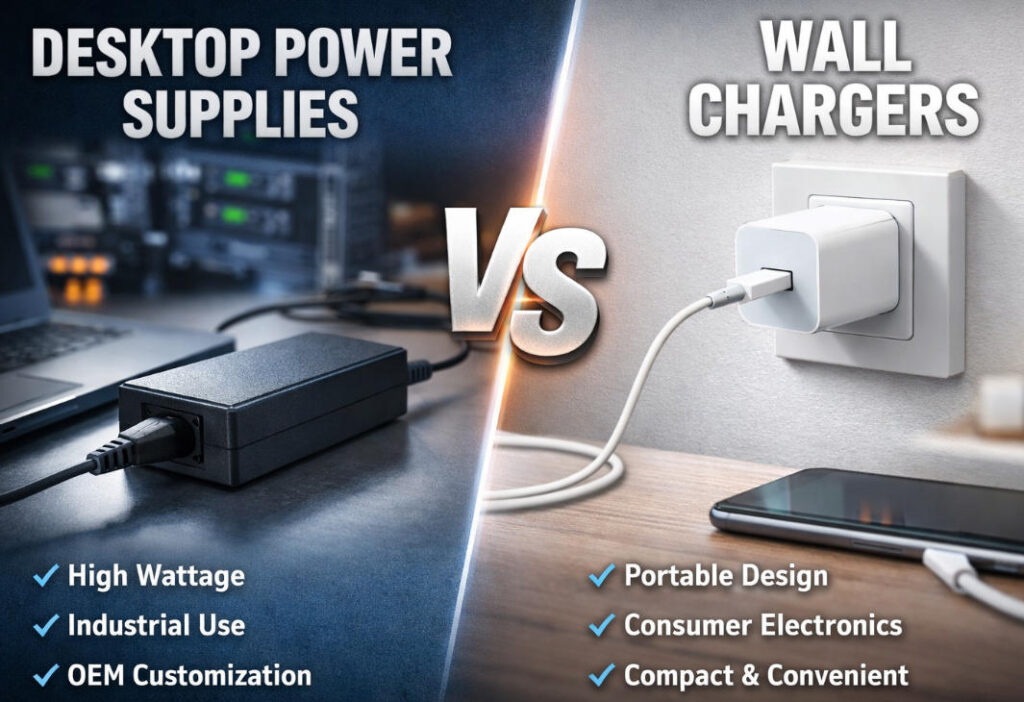
A desktop power supply (sometimes referred to as a desktop AC/DC adapter or power brick) uses a separate AC cable. The adapter body sits on the floor, desk, or inside equipment housing, while a DC cable connects to the end device.
This design is common in:
- Networking equipment
- Security camera systems
- LED lighting drivers
- POS terminals
- Industrial control devices
- Medical electronics
In professional environments, desktop switching power supplies are often preferred because they allow better internal component layout, higher wattage handling, and improved heat dissipation.
What a Wall Charger Really Is
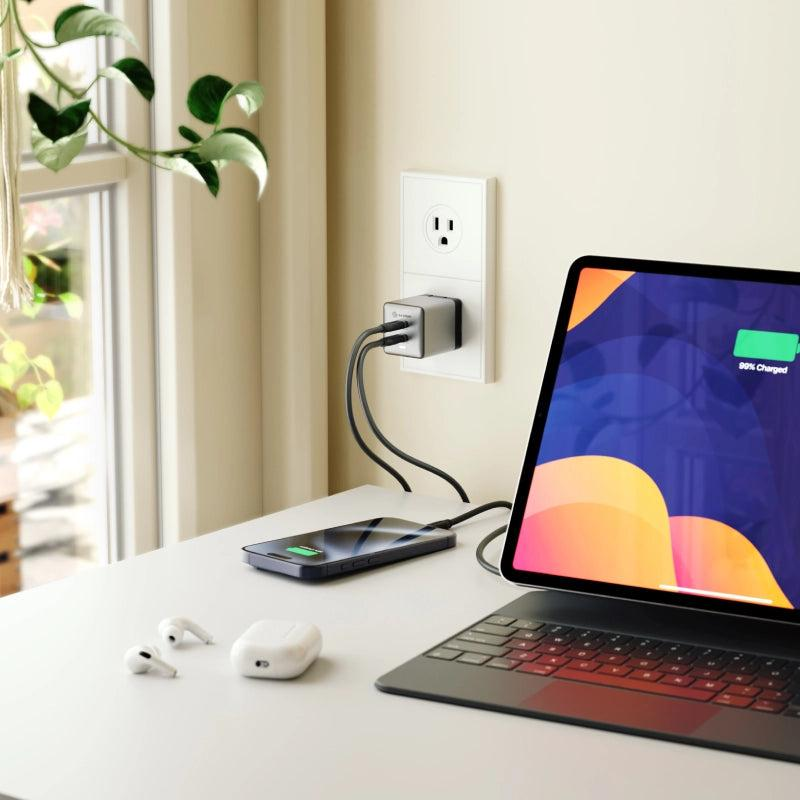
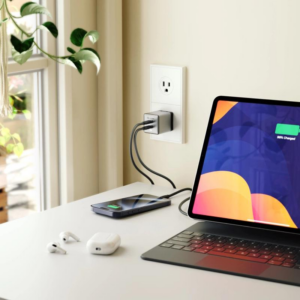
A wall charger—also known as a plug-in power supply—integrates the AC plug directly into the adapter body. It plugs straight into the outlet without a separate power cord.
You’ll typically see these in:
- Mobile devices
- Small home electronics
- Consumer IoT products
- Portable gadgets
- USB-powered accessories
They’re compact, convenient, and cost-effective—perfect for consumer-oriented applications.
But convenience sometimes comes with trade-offs.
Where the Real Differences Begin
1. Power Output and Stability
If your device draws continuous power or exceeds 60W, the conversation changes quickly.
Desktop power supplies:
- Commonly available from 12W up to 300W+
- More stable under sustained load
- Better suited for 24/7 operation
Wall chargers:
- Typically range from 5W to 65W (with some high-power exceptions)
- More suitable for intermittent charging applications
For businesses searching for a high wattage AC/DC power adapter or a reliable industrial power supply, desktop formats generally offer more engineering margin.
In long-term commercial use, stability matters more than compactness.
2. Thermal Performance: The Silent Factor
Heat is the enemy of lifespan.
Wall chargers are small. That’s good for portability—but challenging for thermal management. When components are tightly packed, continuous heavy load can increase internal temperature.
Desktop power supplies, on the other hand, offer:
- Larger casing
- Better airflow
- Improved heat distribution
- Higher efficiency under full load
For equipment like surveillance systems or POS terminals running all day, a desktop external power supply often proves more reliable over time.
3. Installation Flexibility and Global Compatibility
This is something many product managers overlook during early development.
Wall chargers are market-specific. Each country requires a different plug mold. That means separate SKUs for US, EU, UK, AU, etc.
Desktop power supplies simplify global distribution:
- One adapter body
- Interchangeable AC cable
- Easier certification management
- Lower tooling variation
For OEM/ODM projects targeting multiple regions, this flexibility can significantly reduce production complexity.
If you’re sourcing from a professional power adapter factory in China, this modularity becomes a major advantage.
4. Safety Certifications and Compliance
For B2B buyers, certification isn’t optional—it’s foundational.
Reliable manufacturers typically provide:
- UL / ETL
- CE
- FCC
- CB
- DOE Level VI
- ErP compliance
While both wall chargers and desktop power supplies can meet these standards, industrial-grade desktop adapters often have more internal space for reinforced insulation, better creepage distance, and upgraded components.
If your product enters regulated industries, choosing a certified AC/DC power adapter supplier with proven compliance experience becomes critical.
5. OEM & Customization Capabilities
From years of observing OEM projects, customization requirements are rarely simple.
Clients often request:
- Specific output voltage and current
- Custom DC plug types
- Special cable lengths
- Branding or logo printing
- Unique housing color
- Enhanced protection circuits
Desktop power supplies generally allow more structural flexibility for customization.
Wall chargers, especially compact molded versions, are more tooling-dependent and less adaptable once mold development is finalized.
For companies searching for an OEM desktop power adapter manufacturer, this design flexibility is often a deciding factor.
Cost Perspective: Short-Term vs Long-Term Thinking
Yes, wall chargers usually have lower upfront costs:
- Smaller material usage
- Lower shipping volume
- Competitive pricing for consumer markets
But in commercial applications, failure rate matters more than unit price.
A slightly more expensive desktop switching power supply may:
- Reduce warranty claims
- Improve product lifespan
- Enhance brand reputation
- Lower long-term operational risk
Professional buyers rarely choose based on cost alone. They evaluate lifecycle value.
When to Choose Each Option
Choose a Desktop Power Supply If:
- Your device runs continuously
- Power demand exceeds 60W
- Heat management is important
- You need global AC cable flexibility
- The product is industrial or commercial-grade
Choose a Wall Charger If:
- Your device is portable
- Wattage requirement is moderate
- Consumer convenience is priority
- Compact design is essential
There is no universal answer—only application-based logic.
Industry Evolution: The GaN Effect
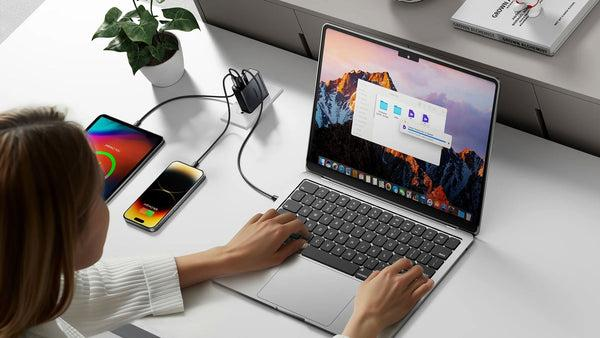
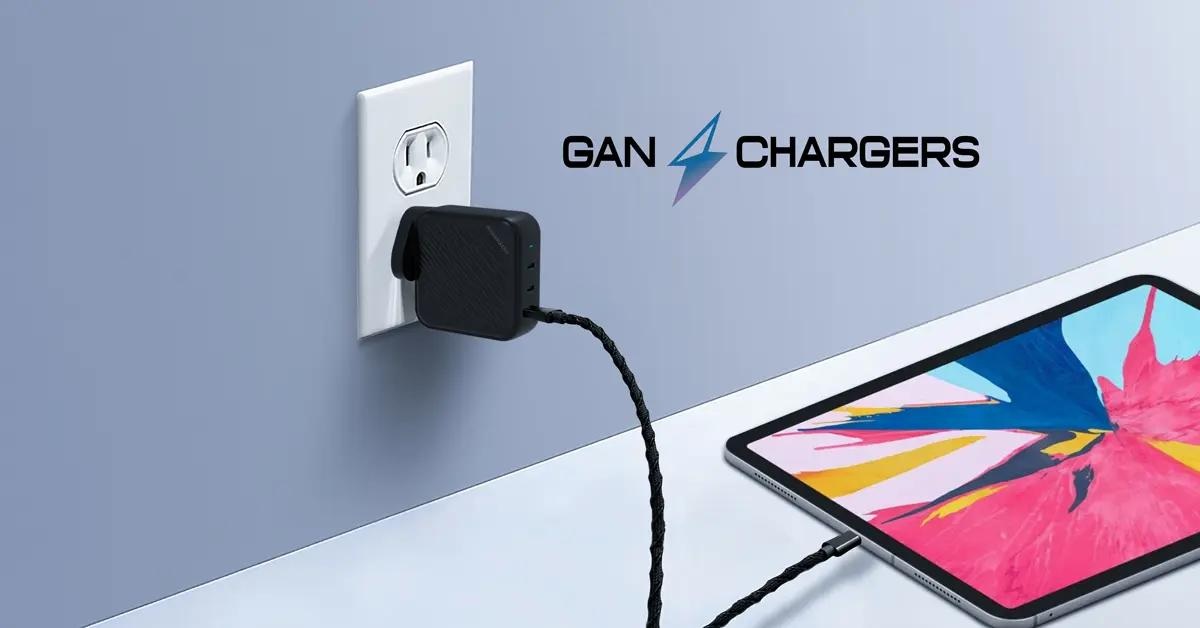
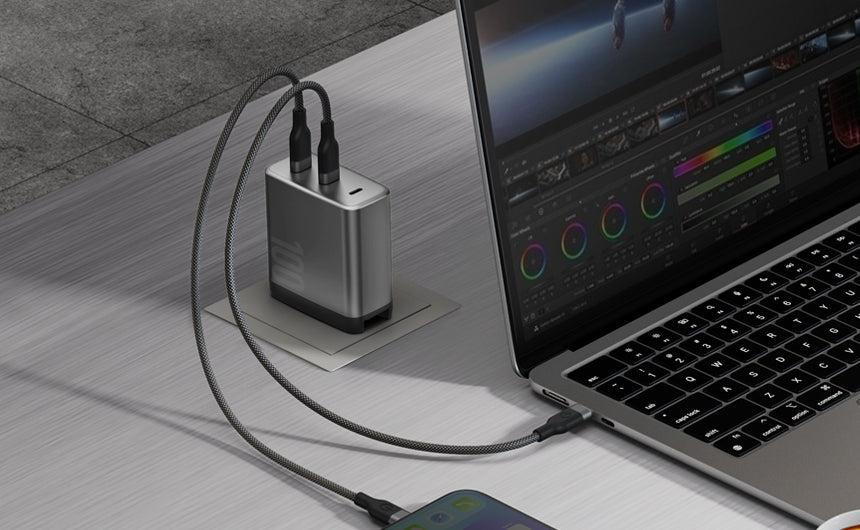
Gallium Nitride (GaN) technology has changed the wall charger landscape dramatically. Today’s high-efficiency GaN chargers can deliver impressive power in compact formats.
However, in industrial environments, traditional desktop power supplies remain dominant because durability, insulation spacing, and mechanical stability still outweigh extreme compactness.
Final Editorial Perspective
In my experience reviewing countless adapter projects, the biggest mistake companies make is selecting a power solution too late in the product development cycle.
Power design influences:
- Thermal planning
- Enclosure layout
- Certification timeline
- Logistics strategy
- After-sales reliability
Desktop power supplies and wall chargers both have clear roles in the market.
The right decision depends on:
- Application environment
- Continuous vs intermittent load
- Certification requirements
- Customization depth
- Global distribution plan
When partnering with an experienced power adapter manufacturer, the discussion should go beyond wattage and price. It should focus on engineering stability, compliance understanding, and production consistency.