If you’ve ever picked up a power adapter and barely given it a second thought—you’re not alone. Most people focus on the device, not the charger. But here’s the truth: the efficiency of your power adapter quietly affects everything from your electricity bill to your device’s lifespan. And honestly? It matters more than most people realize.
And honestly? It matters more than most people realize.
What is Power Adapter Efficiency, Really?
At its core, power adapter efficiency is about how well an adapter converts electricity from your wall into usable power for your device.
- If an adapter is 80% efficient, that means:
- 80% of the electricity powers your device
- 20% is wasted (usually as heat)
Say it simply:
Better efficiency = less wasted energy
You might not see it, but you’ll feel it—especially over time.

Why Power Adapter Efficiency Matters
1. Energy Savings (Yes, It Adds Up)
Let’s be real—one adapter won’t break your electricity bill. But think about how many you use daily:
- Laptop charger
- Phone charger
- Router power supply
- Monitor adapter
- Smart home devices
Now multiply that across households, offices, factories…
That wasted 10–20% energy? It adds up fast.
An energy efficient adapter reduces power loss and helps cut overall energy consumption. Over a year, that’s not just savings—it’s impact.
2. Lower Heat = Better Safety
Here’s something people overlook:
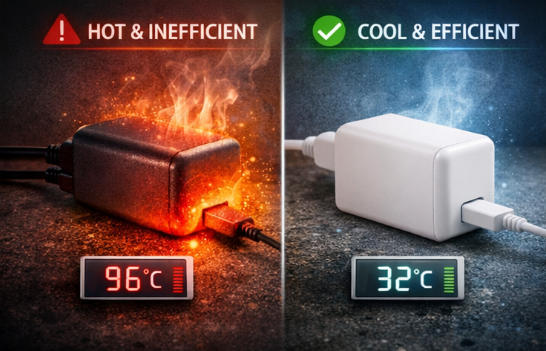
Inefficient adapters generate more heat.
And heat leads to:
- Shorter component lifespan
- Increased failure rates
- Potential safety risks
You’ve probably touched a charger that felt way too hot. That’s a red flag.
A high-efficiency power adapter stays cooler, runs safer, and lasts longer.
3. Better Device Performance
This part surprises people.
A poor-quality adapter doesn’t just waste energy—it can affect your device’s performance.
- Unstable voltage
- Power fluctuations
- Slower charging speeds
Adapter efficiency vs performance isn’t a trade-off—they actually go hand in hand.
A stable, efficient adapter delivers:
- Consistent output
- Faster, optimized charging
- Better long-term device health
What is a Level VI Power Adapter?
You’ve probably seen the term but never really looked into it.
Level VI is an international energy efficiency standard for external power supplies, introduced to reduce wasted energy—especially when devices are idle.
So, what is Level VI power adapter?
A Level VI power supply is designed to:
- Minimize energy loss during operation
- Maintain very low standby power consumption
- Meet strict efficiency regulations (like U.S. DOE standards)
In simple terms:
It’s the modern benchmark for energy-efficient adapters.
Why Level VI Power Supplies Are a Big Deal
1. Ultra-Low Standby Power
Here’s something interesting.
Even when your device is off, your adapter may still be drawing power. This is called no-load or standby consumption.
Older adapters?
They keep wasting energy 24/7.
A low standby power adapter (Level VI) dramatically reduces this waste.
Low standby power adapter benefits:
- Lower electricity usage even when idle
- Reduced carbon footprint
- Compliance with global regulations
2. Higher Conversion Efficiency
Level VI adapters are engineered to deliver more usable power with less loss.
That means:
- Less heat
- Better reliability
- More efficient energy use
3. Regulatory Compliance (Important for B2B)
If you’re selling electronics globally, this isn’t optional. Markets like the U.S. and EU require:
- High efficiency standards
- Certified power supplies
Using a Level VI power supply ensures:
- Legal compliance
- Market access
- Better product credibility
How Efficient Power Adapters Save Energy
Let’s connect the dots.
Traditional Adapter:
- Wastes energy as heat
- Draws power even when idle
- Lower conversion efficiency
Efficient Adapter (Level VI):
- Converts more power effectively
- Minimizes standby consumption
- Reduces total electricity usage
How efficient power adapter saves energy?
It’s not magic—it’s engineering:
- Advanced circuitry
- Better components
- Smarter power management
And over time… real savings.
Adapter Efficiency vs Performance: The Truth
Some people assume:
“More efficient means weaker performance.”
Not true.
In fact, it’s the opposite.
A well-designed energy efficient adapter:
- Delivers stable voltage
- Supports fast charging protocols
- Reduces energy loss
Efficiency improves performance. Period.
Real-World Example (You’ll Relate to This)
Let’s say you’re using a cheap, low-efficiency adapter for your laptop.
You might notice:
- It gets hot quickly
- Charging slows down under load
- It wears out faster
Now switch to a high-efficiency Level VI adapter:
- Cooler operation
- Stable charging speed
- Longer lifespan
Same laptop. Different experience.
How to Choose an Energy Efficient Power Adapter
If you’re buying or sourcing adapters, here’s what actually matters:
1. Look for Level VI Certification
This is non-negotiable for modern devices.
2. Check Efficiency Ratings
Higher efficiency = better performance + energy savings.
3. Pay Attention to Standby Power
A true low standby power adapter saves energy even when unused.
4. Consider Build Quality
Good components = stable output + longer lifespan.
5. Match Your Application
Different devices need different specs:
- Consumer electronics
- Industrial equipment
- Medical devices
Don’t just pick “any” adapter.
Let’s be honest—power adapters aren’t exciting. But they’re essential. And choosing the right one?
It quietly improves everything:
- Energy consumption
- Device performance
- Safety
- Long-term cost
Say it simply:
A better adapter isn’t just about power—it’s about efficiency. And in today’s world, efficiency isn’t optional anymore.