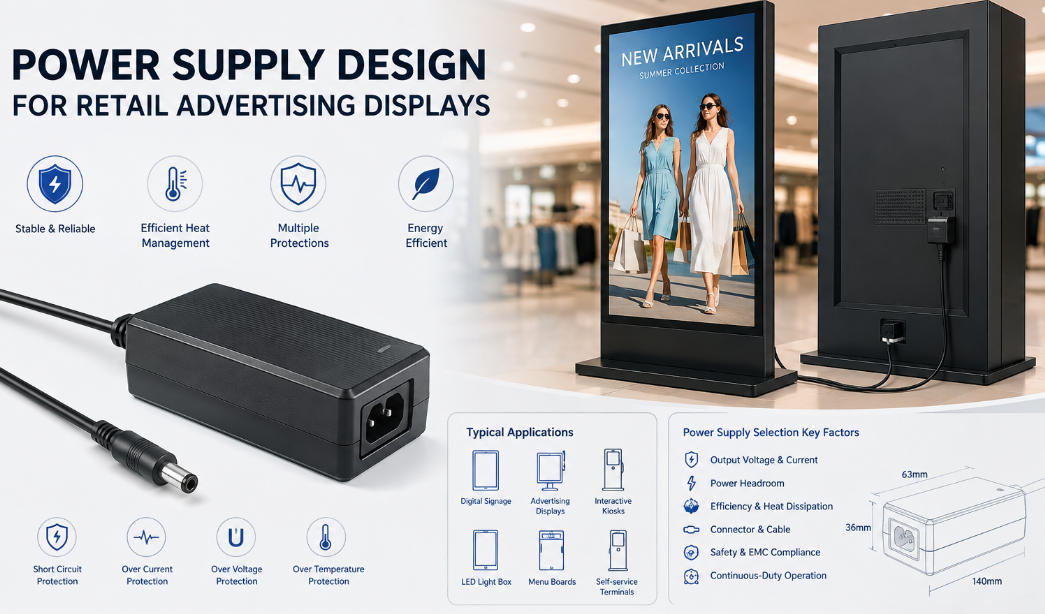
When it comes to the debate between desktop and wall mount power adapters, most people focus on their looks or the way they’re structured. However, the real difference isn’t just about how they look; it’s about how they perform under pressure, over time, and in challenging conditions. What might seem like a minor design choice is actually a crucial decision that impacts thermal efficiency, durability, and overall dependability.
A wall mount adapter is neat and space-saving, but that convenience comes at a cost: higher internal heat generation. On the other hand, a desktop power adapter spreads out its components more evenly, leading to better air circulation and cooler operating temperatures. As the power demand rises, this difference becomes more pronounced, which is why desktop designs tend to be preferred for higher wattage tasks.
Thermal Behavior Defines Long-Term Reliability
Heat is a major player in determining how long a power adapter lasts, yet it’s often overlooked. Desktop adapters usually play it cool because they’re not stuck in a wall outlet, allowing them to release heat more effectively. Wall mount adapters, however, often get stuck in cramped, poorly ventilated spots, where heat tends to pile up.
This brings us to a crucial point when figuring out which power adapter is the safer bet. When it’s being used continuously or dealing with heavier loads, desktop adapters keep their cool better, lessening the chances of overheating and wearing out internal parts. This eventually boils down to enhanced safety and a longer lifespan.
Mechanical Stress and Structural Stability
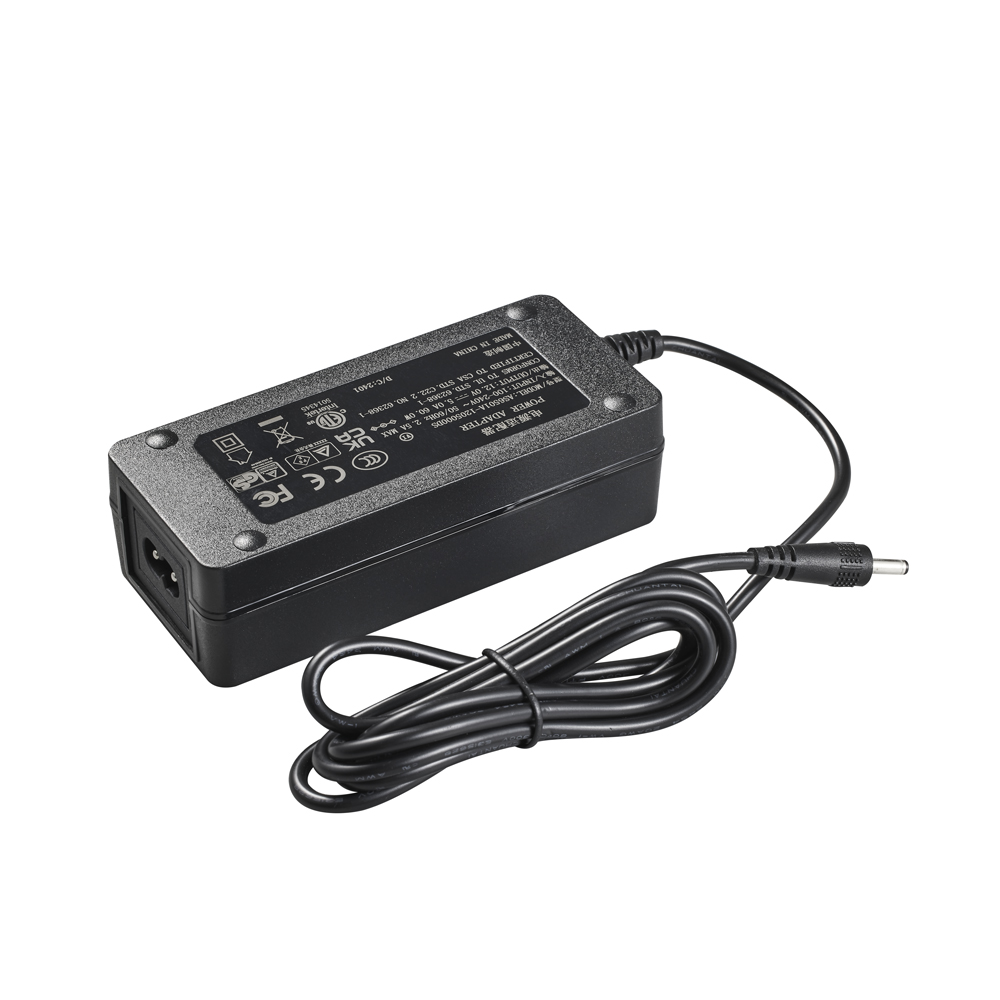
Mechanical stress is a crucial aspect that’s often overlooked, especially when it comes to wall mount adapters. These nifty gadgets place all their weight directly on the socket, which puts it under constant tension. This continuous strain can eventually loosen the connections or compromise the reliability of the contact, particularly in environments where gadgets are frequently plugged and unplugged.
Contrastingly, desktop adapters sidestep this problem by redistributing the physical burden away from the outlet. This clever design lessens the wear on sockets and fosters a more robust connection over time. Although it may seem like a small detail, it’s a game-changer in professional or high-demand situations.
Real-World Efficiency vs Lab Performance
Both types of adapters can meet current efficiency benchmarks, but real-world scenarios often tell a different tale. Efficiency ratings are usually gauged in controlled settings, which don’t always mirror everyday use.
Wall mount adapters might perform admirably under moderate conditions and temperatures, but their efficiency can plummet when faced with heat or prolonged use. Desktop adapters, on the other hand, thanks to their superior thermal management, tend to hold up better, which is crucial in applications that demand uninterrupted performance.
Convenience vs Reliability: A Practical Trade-Off
Wall mount adapters are the clear winners when it comes to portability and ease of use. Their compact design minimizes cable chaos and is perfect for travel or cramped spaces. For consumer electronics and low-powered devices, this form factor is often the most practical option.
However, convenience is a double-edged sword. When considering the benefits of desktop power adapter designs, reliability is the standout trait. These adapters are better at managing sustained loads, providing stable output, and operating continuously without a significant drop in performance.

Failure Patterns and Risk Profile
As time goes by, the discrepancies between these power adapter types become more pronounced in their failure patterns. Wall mount adapters are prone to overheating, plug wear, and socket instability, which can result in inconsistent performance or an early demise.
Desktop adapters, conversely, are more likely to show signs of external wear, like cable fatigue. While not perfect, these issues are typically easier to spot and address before they lead to total failure. This variance in risk profiles is a key reason why desktop adapters are a popular choice in commercial and industrial settings.
Choosing the Right Form Factor for Your Application
The crux of the matter is not just which adapter is superior, but which one aligns best with your particular needs. Wall-mounted adaptors are perfect for gadgets that don’t need a lot of juice, for on-the-go devices, and for areas where every square inch counts. On the other hand, desktop adaptors are the go-to for when you need more power, you’re up and running for longer stretches, or when you require a solid, sturdy solution.
Here’s a straightforward rule of thumb to make the call: the more juice you need and the longer you plan to plug in, the desktop adapter is your best bet. This rule generally holds up when comparing desktop adaptors to wall mount ones, and it’s a solid guideline that both shoppers and professionals can rely on.