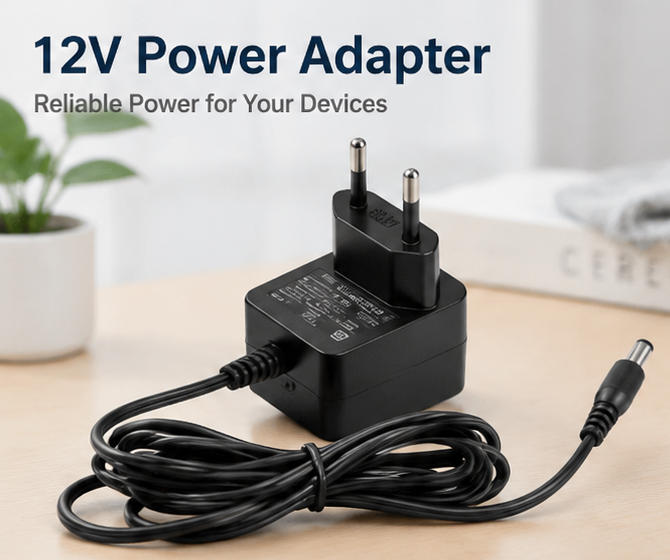
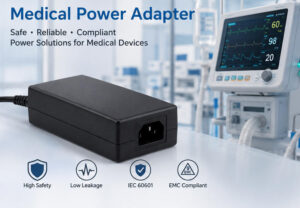
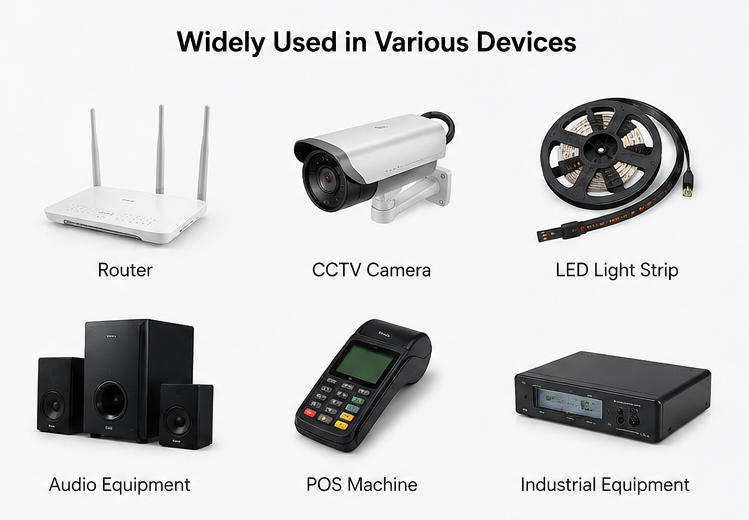
A 12V Power Adapter is one of the most widely used external power supplies in consumer electronics, networking equipment, security systems, LED lighting, smart home devices, and industrial control products. Although many adapters carry the same 12V label, they are not necessarily interchangeable.
Differences in current capacity, connector size, polarity, efficiency, voltage regulation, safety certification, and operating environment can determine whether an adapter powers a device reliably or causes unstable performance, overheating, or permanent damage.
This buying guide explains how to select the right 12V Power Adapter for your equipment. It covers the most important electrical specifications, physical formats, connector requirements, safety features, certifications, and sourcing considerations for both individual buyers and commercial purchasers.
As a professional power supply manufacturer, シュジアル develops and manufactures AC/DC adapters for a wide range of electronic applications, with OEM and ODM options available for global brands, distributors, equipment manufacturers, and system integrators.
1. Match the Output Voltage Exactly
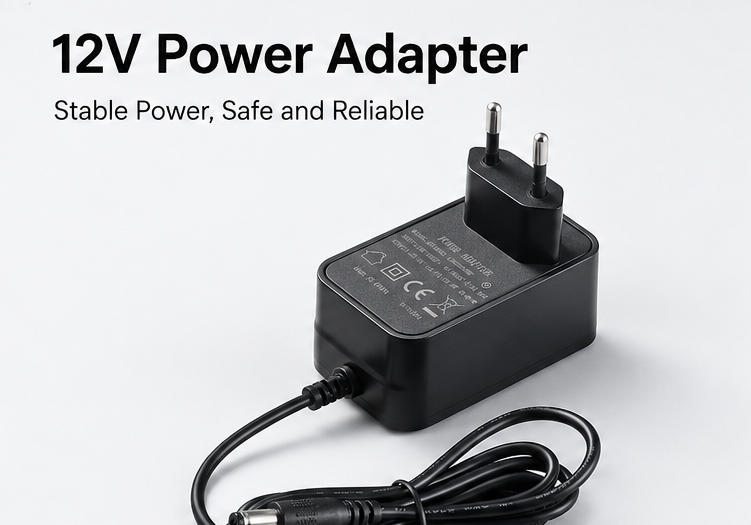
Output voltage is the first specification to check.
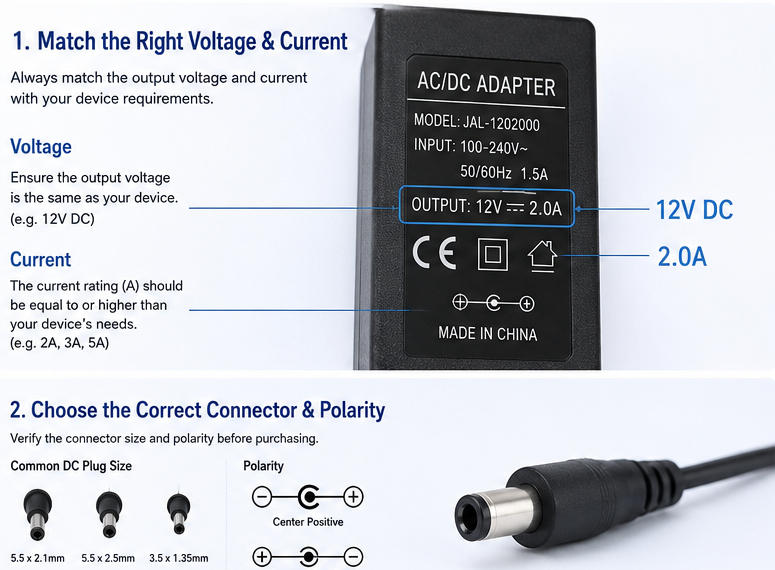
When a device requires 12V DC, the replacement adapter should normally provide a regulated 12V DC output. Using an adapter with a significantly higher voltage may damage sensitive electronic components. An adapter with insufficient voltage may cause the device to restart, operate incorrectly, produce distorted audio, flicker, or fail to turn on.
You can usually find the required input voltage in one of four places:
- On the original power adapter label
- Near the device’s DC input socket
- In the product manual
- On the manufacturer’s technical specification page
Look for information such as:
Input: DC 12V, 2A
In this example, the device needs a 12V adapter capable of supplying at least 2 amperes.
Do not confuse the adapter’s AC input rating with its DC output rating. An adapter may show:
Input: 100–240V AC, 50/60Hz
Output: 12V DC, 2A
The first line describes the electricity accepted from the wall outlet. The second line describes the electricity delivered to the device.
For a broader explanation of adapter voltage, current, polarity, connector selection, and operating environment, see Szjialu’s guide on how to choose the right AC DC power adapter.
2. Choose the Correct Current Rating
After confirming the voltage, check the required current.
Current is measured in amperes, commonly written as A or mA. One ampere equals 1,000 milliamperes.
A 12V Power Adapter should have a current rating equal to or greater than the maximum current required by the device.
例えば:
- A 12V 1A device can use a regulated 12V 1A adapter.
- A 12V 1A device can normally use a regulated 12V 2A adapter.
- A 12V 2A device should not use a 12V 1A adapter.
A higher-current adapter does not normally force extra current into the equipment. The connected device draws the amount of current it needs. Therefore, a properly regulated 12V 3A adapter can power equipment that only requires 12V 2A, provided the connector and polarity are also correct.
However, the current capacity should not be lower than the device requirement. An undersized adapter may overheat, shut down, suffer premature failure, or produce unstable output during peak loads.
Extra current capacity can be particularly useful for equipment with startup surges, motors, hard drives, infrared LEDs, wireless transmitters, or variable processing loads.
3. Calculate the Required Wattage
Power is measured in watts and can be calculated by multiplying voltage by current:
Power = Voltage × Current
For common 12V configurations:
| Output Rating | 最大出力 |
|---|---|
| 12V 0.5A | 6W |
| 12V 1A | 12W |
| 12V 1.5A | 18W |
| 12V 2A | 24W |
| 12V 3A | 36W |
| 12V 5A | 60W |
| 12V 8A | 96W |
| 12V 10A | 120W |
| 12V 20A | 240W |
The adapter’s wattage must be sufficient for the device’s maximum power consumption. For reliable long-term operation, commercial buyers often select an adapter with reasonable power headroom rather than operating it continuously at its absolute maximum rating.
For example, a device that normally consumes 28W but briefly reaches 34W should not be paired with a 30W adapter. A properly designed 36W or higher model would be more appropriate, subject to the equipment manufacturer’s requirements.
Szjialu’s 12V 3A デスクトップ電源 provides a practical example of a 36W desktop adapter intended for applications such as networking equipment, CCTV systems, smart home products, LED lighting, and embedded devices.
4. Verify the DC Connector Size
Matching voltage and current is not enough. The DC connector must physically fit the device.
Barrel connectors are common on 12V equipment, but several sizes look almost identical. Frequently used dimensions include:
- 5.5mm outer diameter × 2.1mm inner diameter
- 5.5mm × 2.5mm
- 4.0mm × 1.7mm
- 3.5mm × 1.35mm
A 5.5 × 2.1mm plug may appear to fit a 5.5 × 2.5mm socket but can create an unreliable electrical connection. This may cause intermittent shutdowns, sparking, voltage drops, or excessive heat at the connection point.
Connector specifications may also include:
- Straight or right-angle plug
- Locking or threaded connector
- Waterproof connector
- DIN connector
- Terminal block
- USB-C connector
- Custom molded connector
- Bare-wire output
Before ordering, confirm the outer diameter, inner diameter, insertion length, and mechanical design of the original connector. For volume projects, providing the equipment manufacturer with a drawing or physical sample can prevent compatibility errors.
5. Check Connector Polarity
Polarity identifies which part of the DC connector is positive and which part is negative.
Most modern 12V adapters with barrel connectors are center-positive, meaning the inner pin is positive and the outer sleeve is negative. However, center-negative products still exist.
Never assume polarity based only on connector size.
The polarity symbol appears on the adapter label and often near the device’s input socket. The replacement adapter must match the equipment exactly. Reversed polarity may prevent operation and can permanently damage devices that do not include reverse-polarity protection.
For customized equipment, the polarity, connector type, cable length, wire gauge, and output plug orientation should all be documented in the product specification.
6. Select the Right Adapter Form Factor
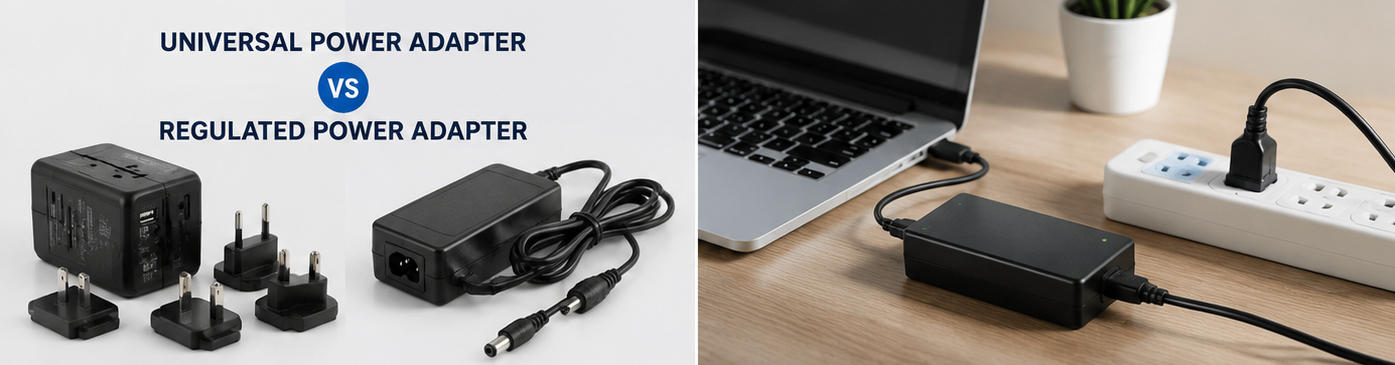
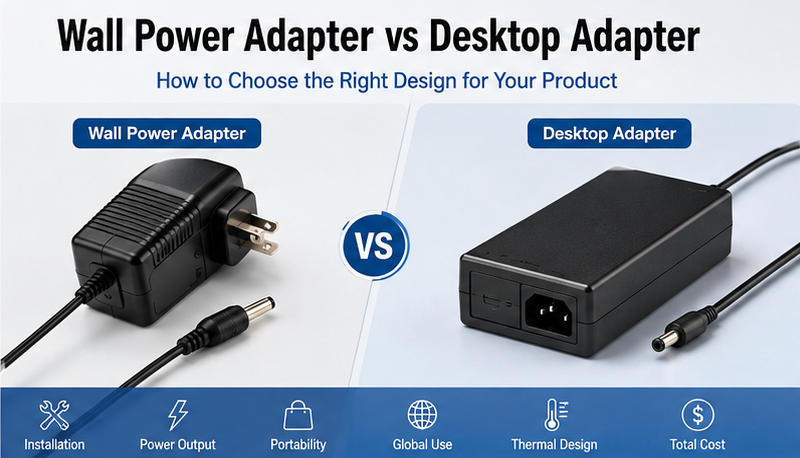
A 12V Power Adapter is commonly available in wall-mount, desktop, or interchangeable-plug formats.
壁掛け式電源アダプター
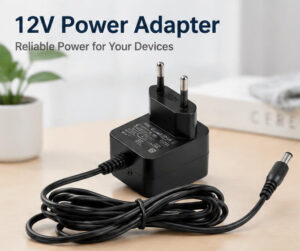
A wall-mount adapter plugs directly into the electrical outlet. It is compact, economical, and convenient for lower-power devices.
Typical applications include routers, cameras, LED controllers, small appliances, and smart home equipment. Szjialu’s 24W電源アダプター AS2406Aシリーズ includes a 12V 2A configuration suitable for many commercial and electronic applications.
Buyers can also compare other models in the wall-mount power adapter category.
When choosing a wall-mount model, consider whether its housing blocks adjacent outlets. Product dimensions and plug orientation can be important for power strips and crowded wall sockets.
デスクトップ用電源アダプター
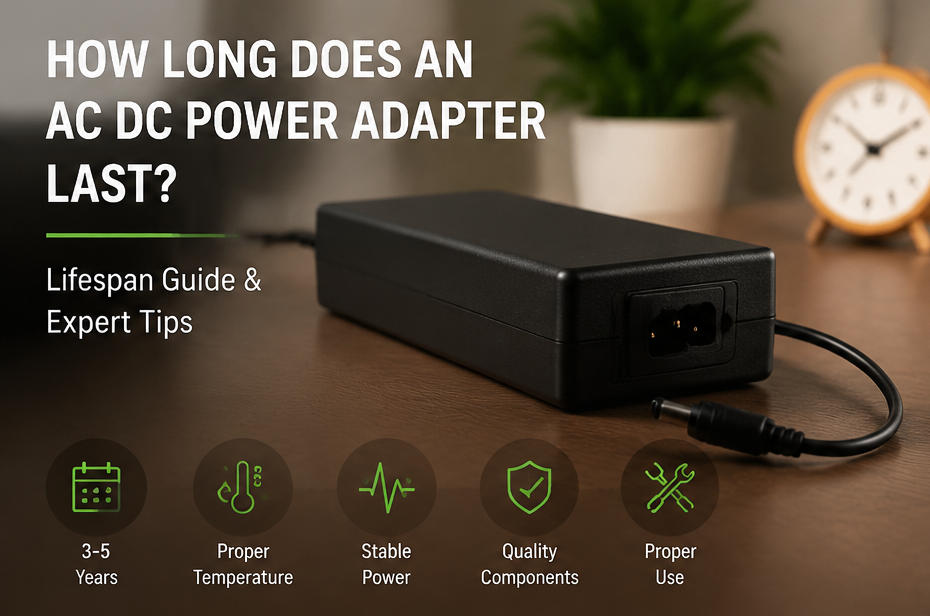
A desktop adapter has a separate AC input and DC output cable. This format is common for higher-power equipment because the adapter does not place its full weight on the wall outlet.
Desktop models are frequently used with monitors, larger LED installations, communication systems, industrial devices, audio equipment, and multi-camera surveillance systems.
The AC inlet may use a C6, C8, or C14 connection, depending on the power rating, grounding requirement, and target application. Buyers sourcing medium- or higher-power units can review Szjialu’s desktop power supply range.
Interchangeable-Plug Power Adapter
An interchangeable-plug design allows different regional AC plug heads to attach to the same adapter body.
This format is useful for international product launches because manufacturers can package US, EU, UK, AU, or other plug modules according to the destination market without redesigning the complete power supply.
の interchangeable-plug power adapter category is particularly relevant for brands that sell the same electronic product in multiple countries.
7. Look for Stable Voltage Regulation
A quality 12V Power Adapter should maintain a stable output as the connected load and AC input conditions change.
Poor voltage regulation can lead to:
- LED flickering
- Router disconnections
- Audio noise
- Camera image interference
- Unexpected device resets
- Reduced component lifespan
- Battery-charging errors
Important technical parameters may include line regulation, load regulation, ripple and noise, output tolerance, transient response, and hold-up time.
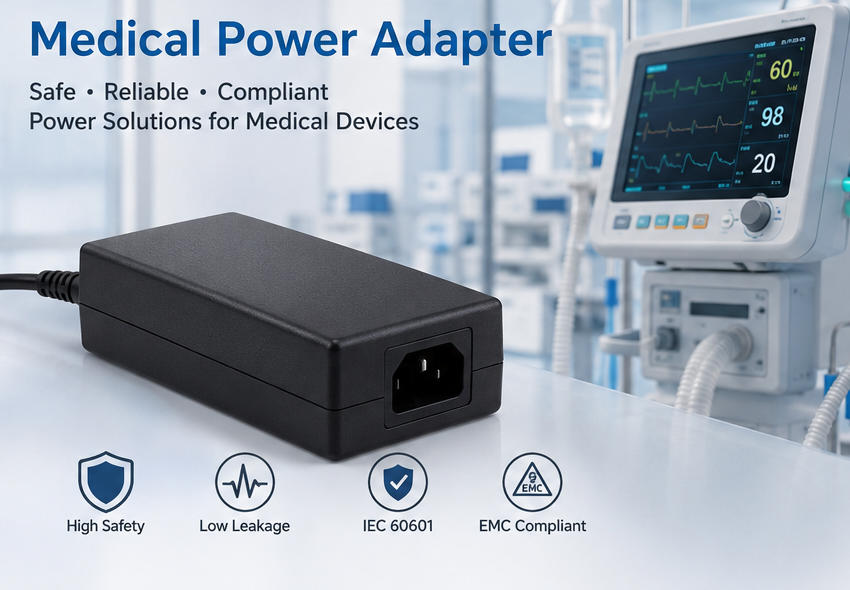
Ripple and noise deserve particular attention in audio, measurement, communication, imaging, and medical-related equipment. Two adapters with identical 12V and 2A labels may perform very differently when connected to sensitive electronics.
For an OEM project, buyers should provide the power supply manufacturer with the device’s normal current, peak current, startup behavior, acceptable voltage range, and ripple limits.
8. Evaluate Safety Protection Features
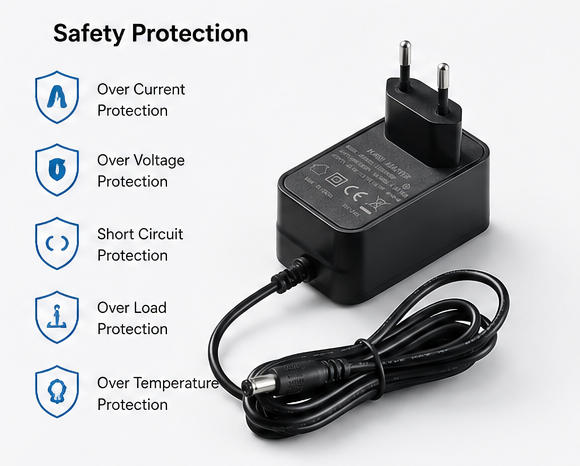
A reliable adapter should include protection circuits that respond to abnormal operating conditions.
Common protections include:
- OCP: 過電流保護
- OVP: 過電圧保護
- SCP: 短絡保護
- OLP: 過負荷保護
- OTP: Overtemperature protection
These functions help protect the adapter and connected device, but their implementation matters. Buyers should review whether protection is automatic-recovery, latch-off, hiccup-mode, or another response type suitable for the application.
The enclosure material is also important. Flame-resistant housing, appropriate creepage and clearance distances, quality transformers, approved capacitors, and reliable insulation systems all contribute to product safety.
Avoid choosing an adapter solely because it has the lowest price. Internal component quality, thermal design, production consistency, and safety testing can have a much greater impact on long-term cost and product reliability.
9. Confirm Efficiency and Standby Power
Energy-efficient adapters waste less electricity as heat.
Higher efficiency can provide several benefits:
- 動作温度を下げる
- Reduced electricity consumption
- Longer component life
- 信頼性の向上
- Easier compliance with market requirements
- 待機電力消費量の低減
Efficiency is especially important when thousands of adapters operate continuously in networking, surveillance, smart home, retail, or industrial installations.
Check the applicable efficiency requirements for the intended country and product category. Requirements may differ according to output power, voltage, application, and whether the adapter is sold as part of a complete system.
10. Check Regional Certifications
A 12V adapter intended for commercial sale should have certifications appropriate for its destination market.
Depending on the product and region, buyers may encounter certification or compliance marks such as:
- UL or ETL for the United States and Canada
- CE for the European market
- UKCA for Great Britain
- FCC for electromagnetic compatibility in the United States
- PSE for Japan
- KC for South Korea
- SAA or RCM for Australia and New Zealand
- CCC for China
- CB for international certification programs
- RoHS and REACH for restricted substances and chemical compliance
A certification logo printed on a label should not be accepted without verification. Commercial purchasers should request reports, certificates, model references, and confirmation that the certified construction matches the product being supplied.
Szjialu presents its relevant quality approvals and market certifications on its certificate page.
11. Consider the Operating Environment
The correct adapter also depends on where and how it will be used.
Important environmental factors include:
- Indoor or outdoor installation
- Ambient temperature
- Humidity
- Dust exposure
- Ventilation
- Continuous or intermittent operation
- Altitude
- Vibration
- Contact with water
- Installation inside another enclosure
A standard indoor adapter should not be exposed directly to rain or condensation. Outdoor LED systems, security equipment, and industrial installations may require a waterproof or enclosed power supply with an appropriate ingress-protection rating.
Temperature is equally important. An adapter that operates reliably in an air-conditioned office may need derating when installed in a sealed cabinet or near heat-generating equipment.
12. Avoid Common Buying Mistakes
Several purchasing mistakes occur repeatedly when replacing or sourcing 12V power supplies.
Choosing by Voltage Alone
Two adapters may both provide 12V but differ in current, connector, polarity, regulation, or certification. Every critical specification must be checked.
Using an Underrated Adapter
A 12V 1A adapter is not an appropriate replacement for equipment that requires 12V 3A. The device may operate briefly but become unstable under load.
Ignoring Startup Current
Motors, pumps, hard drives, amplifiers, LED systems, and multi-camera products can draw more current during startup than during normal operation.
Assuming All Barrel Plugs Are the Same
Small differences in inner-pin diameter can cause loose or intermittent connections.
Buying Unverified Low-Cost Products
Poor insulation, inadequate thermal design, excessive ripple, counterfeit certifications, and inconsistent components can create safety and reliability problems.
Forgetting Regional Plug Requirements
The AC plug or input cord must match the destination country. International brands should plan plug standards, certification, packaging, and labeling before mass production.
13. Buying a 12V Power Adapter for OEM or Bulk Projects
Commercial sourcing requires more evaluation than purchasing a single replacement adapter.
A complete OEM specification should define:
- AC input range
- Output voltage and tolerance
- Continuous and peak current
- Rated wattage
- Ripple and noise limits
- Connector dimensions
- Connector polarity
- Cable length and wire gauge
- Adapter enclosure type
- AC plug or inlet
- Efficiency requirements
- Safety protections
- Required certifications
- Operating temperature
- Product label
- Logo and branding
- パッケージ
- Reliability testing
- Warranty expectations
Before mass production, buyers should evaluate engineering samples under real operating conditions. Testing should include startup, full load, peak load, temperature rise, long-duration operation, voltage stability, connector fit, and electromagnetic compatibility with the complete device.
Szjialu provides OEM and ODM power adapter services for customers requiring customized electrical specifications, connectors, cables, labels, packaging, plug standards, and certification support.
Final 12V Power Adapter Buying Checklist
Before placing an order, confirm the following:
- The output is regulated 12V DC.
- The current rating meets or exceeds the device requirement.
- The wattage provides sufficient capacity.
- The connector dimensions match exactly.
- The connector polarity is correct.
- The wall plug or AC inlet suits the destination market.
- The adapter format fits the installation.
- Ripple, regulation, and thermal performance meet the application requirements.
- Safety protections are included.
- Required regional certifications are valid.
- Cable length and wire gauge are suitable.
- The adapter has been tested with the actual device.
結論
Choosing the correct 12V Power Adapter requires more than finding a power supply with “12V” printed on its label. Voltage must match, current capacity must be sufficient, and the connector and polarity must be correct. Buyers should also evaluate efficiency, output stability, thermal performance, safety protections, certifications, and environmental conditions.
For basic devices, a standard 12V 1A or 12V 2A wall adapter may be sufficient. Equipment with higher current demand, continuous operation, startup surges, or stricter reliability requirements may need a 12V 3A, 5A, 8A, or higher-power desktop solution.
For manufacturers and distributors, selecting the right adapter early in product development can reduce certification risks, field failures, returns, and compatibility problems. Working with an experienced manufacturer also makes it easier to customize the electrical output, enclosure, plug type, DC connector, cable, branding, and packaging for a specific market.
Szjialu supplies wall-mount, desktop, and interchangeable-plug power adapters for a broad range of electronic applications. By defining the device requirements clearly and testing the adapter with the complete system, buyers can achieve safer, more stable, and more reliable 12V power delivery.