China has become the world’s largest manufacturing hub for USB-C chargers, producing everything from entry-level phone adapters to high-performance 100W GaN chargers for laptops, tablets, and mobile devices. However, finding a reliable supplier is far more challenging than simply comparing prices.
A low-cost quotation may seem attractive at first, but hidden issues such as inconsistent quality, poor safety standards, delayed deliveries, or lack of engineering support can lead to expensive product recalls, customer complaints, and damage to your brand reputation.
Whether you’re an importer, distributor, private-label brand, or OEM buyer, selecting the right manufacturing partner requires a systematic evaluation process. This guide explains the key factors experienced sourcing professionals use when selecting a dependable 100W charger supplier in China.
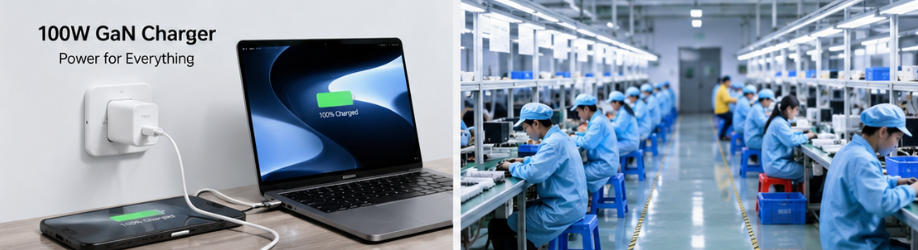
Why Supplier Selection Matters More Than Price
Many buyers make the mistake of choosing suppliers based primarily on unit price. In reality, the total cost of ownership includes much more than the purchase price.
A professional supplier helps reduce:
- Product failure rates
- Warranty claims
- Shipping delays
- Certification risks
- Supply chain interruptions
- Engineering revision costs
For high-power USB-C PD chargers, where thermal management, power efficiency, and safety are critical, manufacturing capability directly affects product reliability.
1: Key Factory Evaluation Criteria
製造業での経験
Experience is one of the strongest indicators of production stability.
Ask suppliers questions such as:
- How many years have you manufactured power adapters?
- Do you specialize in USB-C PD chargers?
- Have you produced 100W GaN chargers before?
- Which export markets do you serve?
Factories serving Europe, North America, Japan, and Australia generally have more mature quality systems because these markets require strict compliance.
In-House Engineering Team
A reliable supplier is more than a production facility.
Look for manufacturers that have:
- Hardware engineers
- PCB designers
- Power electronics specialists
- Thermal engineers
- Mechanical design engineers
- Firmware support (if applicable)
Engineering capability becomes especially important for:
- OEMプロジェクト
- ODM development
- カスタム住宅設計
- Multi-port chargers
- Private label products
Without engineering resources, even small design modifications can become lengthy and costly.
生産能力
Capacity affects delivery reliability.
Consider evaluating:
- Number of SMT lines
- Assembly lines
- Daily production output
- Monthly capacity
- 自動化レベル
- Workforce stability
A factory operating near maximum capacity may struggle to accommodate urgent orders or seasonal demand.
Supply Chain Stability
Reliable factories typically maintain long-term relationships with component suppliers.
Important components include:
- GaN power ICs
- MOSFETs
- トランスフォーマー
- コンデンサ
- USB-C controllers
- Safety components
Stable sourcing reduces lead-time fluctuations and minimizes production disruptions.
OEM and ODM Capabilities
Business buyers often require customization beyond logo printing.
Professional suppliers should support:
- Custom casing
- プライベートラベル
- パッケージデザイン
- 色のカスタマイズ
- Regional plug options
- Power profile customization
- Multi-port configuration
Companies such as シュジアル, which focus on charger manufacturing, typically offer OEM and ODM services that help overseas brands launch customized charging products while maintaining international compliance requirements.
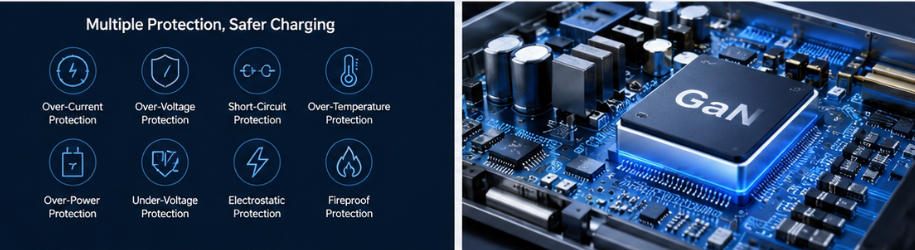
2: Quality Control and Testing Systems
Manufacturing quality should never rely solely on final inspection.
Professional factories implement quality control throughout the production process.
Incoming Material Inspection (IQC)
Quality begins before production starts.
Every batch of components should undergo inspection for:
- Electrical specifications
- 寸法
- Appearance
- Safety compliance
- Supplier consistency
Rejecting defective components early significantly reduces production defects.
In-Process Quality Control (IPQC)
Production monitoring helps identify problems before mass defects occur.
Typical inspections include:
- PCB solder quality
- Component placement
- Assembly accuracy
- Torque testing
- Functional verification
Continuous monitoring prevents small issues from becoming large-scale failures.
Functional Testing
Every charger should undergo comprehensive electrical testing.
Typical tests include:
- 出力電圧精度
- USB-C PD negotiation
- Full-load testing
- マルチポート電源分配
- Efficiency measurement
- Ripple and noise testing
- Standby power consumption
For 100W chargers, power allocation testing is especially important because incorrect USB-C Power Delivery negotiation may affect charging compatibility.
安全性試験
Safety testing protects both end users and brands.
Essential tests include:
- High-voltage (Hi-Pot) testing
- Ground continuity
- Leakage current
- Insulation resistance
- 短絡保護
- 過電流保護
- 過電圧保護
- 過熱保護
信頼性試験
Long-term durability separates premium suppliers from budget manufacturers.
Common reliability tests include:
- バーンインテスト
- High-temperature operation
- Low-temperature storage
- Thermal cycling
- Humidity testing
- 落下試験
- プラグ挿入試験
- Cable bending tests (if applicable)
Many reputable factories conduct 100% burn-in testing before shipment to ensure product stability.
3: Certification and Compliance Requirements
International certifications are essential for selling chargers in global markets.
Choosing a supplier familiar with regulatory requirements can significantly reduce certification delays.
North America
Products entering the U.S. and Canada commonly require:
- UL
- ETL
- FCC
Electrical safety documentation is often requested by retailers and importers.
European Market
European buyers typically require:
- CE
- RoHS
- 到着
- ERP (Energy Efficiency)
Additional testing may be necessary depending on the product category.
イギリス
Following Brexit, UK-specific compliance includes:
- UKCA
Australia and New Zealand
Common certifications include:
- SAA
- RCM
日本
For Japan, suppliers should understand:
- PSE認証
韓国
Products may require:
- KC certification
USB-C Compliance
Beyond regional approvals, modern chargers should support:
- USB-C Power Delivery
- PPS (Programmable Power Supply), if applicable
- USB-IF design guidelines
Compliance improves compatibility across smartphones, tablets, and laptops.
Documentation Matters
Reliable suppliers should provide:
- テストレポート
- 証明書ファイル
- Material declarations
- Product specifications
- ユーザーマニュアル
- Factory audit reports upon request
Incomplete documentation often indicates limited export experience.
4: Red Flags to Avoid Low-Quality Suppliers
Not every supplier advertising online is a true manufacturer. Identifying warning signs early can save significant time and cost.
Unrealistically Low Prices
If one quotation is dramatically lower than others, investigate why.
Possible reasons include:
- 低品質の部品
- 安全マージンの低下
- Missing certifications
- Inadequate testing
- Outsourced production
- Lower manufacturing standards
Price should never be the only deciding factor.
No Factory Audit or Virtual Tour
Professional manufacturers are generally willing to demonstrate their production capabilities through:
- Factory visits
- Video factory tours
- Live production walkthroughs
- Equipment demonstrations
Suppliers unwilling to provide transparency may not operate their own production facilities.
Limited Technical Knowledge
Sales representatives should be able to explain:
- USB-C PD protocols
- GaN技術
- Power distribution
- 熱設計
- Protection mechanisms
If technical questions cannot be answered, engineering support may be limited.
No Testing Reports
A trustworthy supplier should readily provide:
- Reliability reports
- 安全報告
- Certification copies
- Aging test records
- Product specifications
Missing documentation is a major warning sign.
Poor Communication
Communication quality often reflects project management capability.
Warning signs include:
- Slow responses
- Inconsistent quotations
- Frequent specification changes
- Lack of technical detail
- Unclear production timelines
Reliable suppliers communicate proactively throughout the project lifecycle.
No Long-Term Quality System
Ask whether the factory follows standardized quality management procedures.
Indicators of a mature quality system include:
- ISO-certified management systems
- Traceability for production batches
- Standard operating procedures (SOPs)
- Corrective and preventive action (CAPA) processes
- Continuous improvement initiatives
These systems help ensure consistent product quality over time.
Tag Framework: What Professional Buyers Should Focus On
To evaluate suppliers more effectively, keep these key decision areas in mind:
| Evaluation Area | Why It Matters |
|---|---|
| 製造業での経験 | Indicates production maturity and problem-solving capability |
| Engineering Support | Essential for OEM/ODM customization and product development |
| Quality Control | Reduces defect rates and warranty claims |
| 資格認定 | Ensures products can be legally sold in target markets |
| 信頼性試験 | Confirms long-term product durability |
| Supply Chain Stability | Minimizes delivery delays and component shortages |
| Communication | Improves project efficiency and reduces sourcing risks |
| Factory Transparency | Builds confidence through audits, reports, and production visibility |
| 生産能力 | Supports scalable orders and consistent lead times |
| アフターサービス | Helps resolve technical issues and maintain long-term partnerships |
Best Practices Before Placing Your First Order
Even after selecting a promising supplier, it is wise to validate their capabilities through a structured onboarding process.
A recommended approach includes:
- Request product samples for evaluation.
- Verify certification documents with issuing authorities where appropriate.
- Review test reports and quality records.
- Conduct a factory audit or virtual inspection.
- Confirm production lead times and monthly capacity.
- Place a pilot order before committing to large volumes.
- Monitor quality consistency across the first production batches.
Taking these steps can significantly reduce sourcing risks and establish a stronger foundation for long-term cooperation.
結論
Choosing a reliable 100W charger supplier in China requires more than comparing quotations. The most dependable manufacturers combine strong engineering expertise, rigorous quality control, internationally recognized certifications, transparent manufacturing processes, and responsive customer support.
By evaluating factors such as production capability, testing systems, compliance documentation, and communication standards, buyers can reduce sourcing risks while improving product quality and long-term business performance.
Whether you are developing a private-label charger, launching a new electronics brand, or expanding your OEM product line, partnering with an experienced manufacturer—such as シュジアル, which specializes in power adapters and USB-C charging solutions—can provide valuable technical support and manufacturing consistency without compromising compliance or reliability.