USB-C has rapidly become the universal connector for smartphones, laptops, tablets, gaming devices, monitors, and countless accessories. Whether you’re buying a new charger, choosing a USB cable, or evaluating electronic products for your business, understanding what is USB-C is essential.
Unlike older USB standards, USB-C is more than just a connector. It combines high-speed data transfer, powerful charging capabilities, video output, and broad compatibility into a single compact interface. This versatility has made it the preferred standard for both consumers and manufacturers worldwide.
As a professional charger manufacturer, Szjialu develops USB-C charging solutions that support modern fast-charging technologies, including USB Power Delivery (PD), GaN technology, and intelligent power management for global OEM and ODM customers.
In this guide, we’ll explain everything you need to know about USB-C, including how it works, its advantages, supported protocols, and how to choose the right USB-C charger.
What Is USB-C?
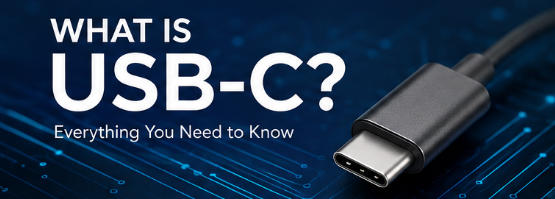
USB-C (also called USB Type-C) is a 24-pin reversible connector standard developed by the USB Implementers Forum (USB-IF). It was designed to replace older USB connectors by offering one universal interface capable of handling:
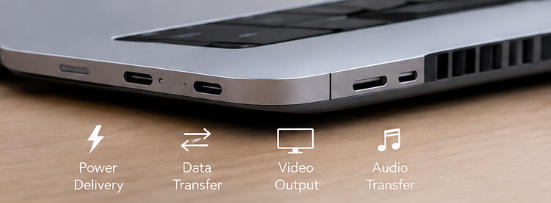
- Power delivery
- High-speed data transfer
- Video output
- Audio transmission
- Device communication
Unlike previous USB connectors, USB-C can be plugged in from either direction, eliminating the frustration of incorrect insertion.
Today, USB-C has become the standard connector on many devices, including:
- MacBook
- Windows laptops
- iPad
- Android smartphones
- Externe SSDs
- Tragbare Monitore
- Gaming handhelds
- Dockingstationen
- USB hubs
Its versatility has made it one of the most significant advancements in consumer electronics connectivity.
Why Was USB-C Developed?
Before USB-C, users had to deal with multiple connector types:
- USB-A
- USB-B
- Mini USB
- Micro USB
- Proprietary charging ports
Each connector served different purposes, creating compatibility issues and increasing electronic waste.
USB-C was created to simplify device connectivity by providing one universal connector capable of replacing many older interfaces.
The result is:
- Fewer cables
- Schnelleres Laden
- Higher transfer speeds
- Better compatibility
- Simplified product design
Main Features of USB-C
1. Reversible Connector
Perhaps the most recognizable feature is its symmetrical design.
Unlike USB-A or Micro USB, USB-C works regardless of orientation, making everyday use far more convenient.
2. High-Speed Charging
USB-C itself does not determine charging speed.
Instead, it supports advanced charging protocols like USB-Stromversorgung (PD), allowing chargers and devices to negotiate safe power levels automatically.
Depending on supported standards, USB-C can deliver:
- 15 W
- 27W
- 45 W
- 65 W
- 100 W
- 140 W
- 240W (USB PD 3.1 EPR)
For a detailed explanation of Power Delivery technology, read:
What Is a 100W PD Charger and How Does It Work?
3. Fast Data Transfer
USB-C supports multiple USB standards.
Depending on the protocol implemented, transfer speeds may include:
| Standard | Maximum Speed |
|---|---|
| USB 2.0 | 480 Mbps |
| USB 3.2 Gen 1 | 5 Gbps |
| USB 3.2 Gen 2 | 10 Gbps |
| USB 3.2 Gen 2×2 | 20 Gbps |
| USB4 | 40 Gbps |
| USB4 Version 2 | Up to 80 Gbps |
It’s important to understand that the connector alone doesn’t determine speed. The internal controller and cable specifications also matter.
4. Video Output
USB-C supports DisplayPort Alt Mode, HDMI Alt Mode, and Thunderbolt technologies.
This enables users to connect:
- External monitors
- 4K displays
- 8K displays
- Projectors
- Dockingstationen
Many modern laptops now use a single USB-C cable for:
- Laden
- Data
- Display
This creates a cleaner and more efficient workspace.
USB-C vs USB-A
Many people confuse USB-C with USB-A.
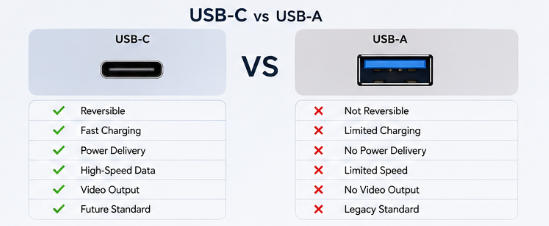
Here’s a quick comparison:
| Besonderheit | USB-A | USB-C |
|---|---|---|
| Reversibel | No | Ja |
| Fast Charging | Beschränkt | Exzellent |
| Power Delivery | No | Ja |
| Video Output | No | Ja |
| High-Speed Data | Beschränkt | Exzellent |
| Future Support | Declining | Industry Standard |
USB-C is clearly designed for the future, while USB-A primarily exists for backward compatibility.
USB-C and USB Power Delivery (PD)
One common misconception is that every USB-C charger supports fast charging.
In reality:
USB-C defines the connector.
USB-Stromversorgung (PD) defines the charging protocol.
PD allows the charger and device to communicate before power is delivered.
Zum Beispiel:
- Smartphone requests 20W
- Tablet requests 30W
- Laptop requests 65W
- Workstation requests 100W
The charger only supplies the amount of power requested, ensuring efficient and safe charging.
If you’re interested in protocol evolution, read:
USB-C PD 3.0 vs PD 3.1: What’s New in 100W Charging?
Is Every USB-C Cable the Same?
Absolutely not.
USB-C cables vary significantly in:
- Charging capability
- Data speed
- Video support
- Verarbeitungsqualität
- E-marker chip support
Beispiele hierfür sind:
Basic cable
- USB 2.0
- 60W charging
Premium cable
- USB4
- 240W charging
- 40Gbps transfer
- 8K video
Choosing the wrong cable may reduce charging performance or limit data speeds.
USB-C and GaN Chargers
Modern USB-C chargers increasingly use Galliumnitrid (GaN) semiconductors instead of traditional silicon.
Advantages include:
- Kleinere Größe
- Geringere Wärmeentwicklung
- Höhere Effizienz
- Better thermal management
- Höhere Leistungsdichte
This allows manufacturers to produce compact chargers capable of delivering 100W or more without becoming bulky.
Learn more here:
Is USB-C Safe?
Yes—provided you use certified chargers and cables.
Modern USB-C chargers include multiple safety protections:
- Überspannungsschutz
- Überstromschutz
- Überhitzungsschutz
- Kurzschlussschutz
- Intelligente Leistungsverhandlung
Certified products comply with international safety standards such as:
- CE
- FCC
- UL
- UKCA
- RoHS
A high-wattage charger does nicht force extra power into your device. Instead, the connected device requests only the power it needs through the USB PD protocol.
For a more in-depth explanation, see:
Ist ein 100-Watt-Ladegerät sicher für Handys und Laptops?
How to Choose the Right USB-C Charger
When selecting a USB-C charger, consider:
Ausgangsleistung
Match the charger to your device:
- 20W for smartphones
- 30W–45W for tablets
- 65W for ultrabooks
- 100W for professional laptops
Protocol Support
Look for support for:
- USB Power Delivery
- PPS
- QC-Kompatibilität
Zertifizierungen
Always verify:
- CE
- FCC
- UL
- RoHS
Multi-Port Design
Many users now charge:
- Laptop
- Smartphone
- Ohrhörer
- Smartwatch
A multi-port USB-C charger reduces cable clutter and improves convenience.
Manufacturer Experience
For distributors, wholesalers, and OEM brands, selecting an experienced manufacturer ensures:
- Stable quality
- Certified products
- Reliable production capacity
- Comprehensive testing
- Custom branding and packaging
Szjialu specializes in OEM and ODM USB-C charging solutions, offering high-performance PD and GaN chargers designed for global markets.
Häufig gestellte Fragen
Is USB-C faster than USB-A?
Yes. USB-C supports much higher charging power, faster data transfer, and video output capabilities.
Can USB-C charge a laptop?
Yes. Most modern laptops support USB Power Delivery through USB-C.
Does every USB-C charger support fast charging?
No. Fast charging depends on supported protocols such as USB Power Delivery or PPS.
Can one USB-C charger charge multiple devices?
Yes. Multi-port USB-C chargers intelligently distribute power between connected devices.
Is USB-C replacing all other connectors?
The trend strongly suggests yes. Many manufacturers have already transitioned entirely to USB-C for charging and connectivity.
Abschluss
USB-C has transformed the way modern devices connect, charge, and communicate. More than just a connector, it serves as the foundation for a universal ecosystem that supports fast charging, high-speed data transfer, and seamless multimedia connectivity.
As USB Power Delivery, GaN technology, and USB4 continue to evolve, USB-C will remain at the center of next-generation electronics. Whether you’re a consumer seeking a reliable charger or a business sourcing OEM charging solutions, understanding what is USB-C helps you make informed decisions that improve compatibility, efficiency, and long-term value.
For businesses looking for dependable USB-C charging products, Szjialu offers a comprehensive portfolio of certified PD and GaN chargers backed by OEM/ODM manufacturing expertise and strict quality control, helping partners deliver safe, efficient, and future-ready charging solutions worldwide.